
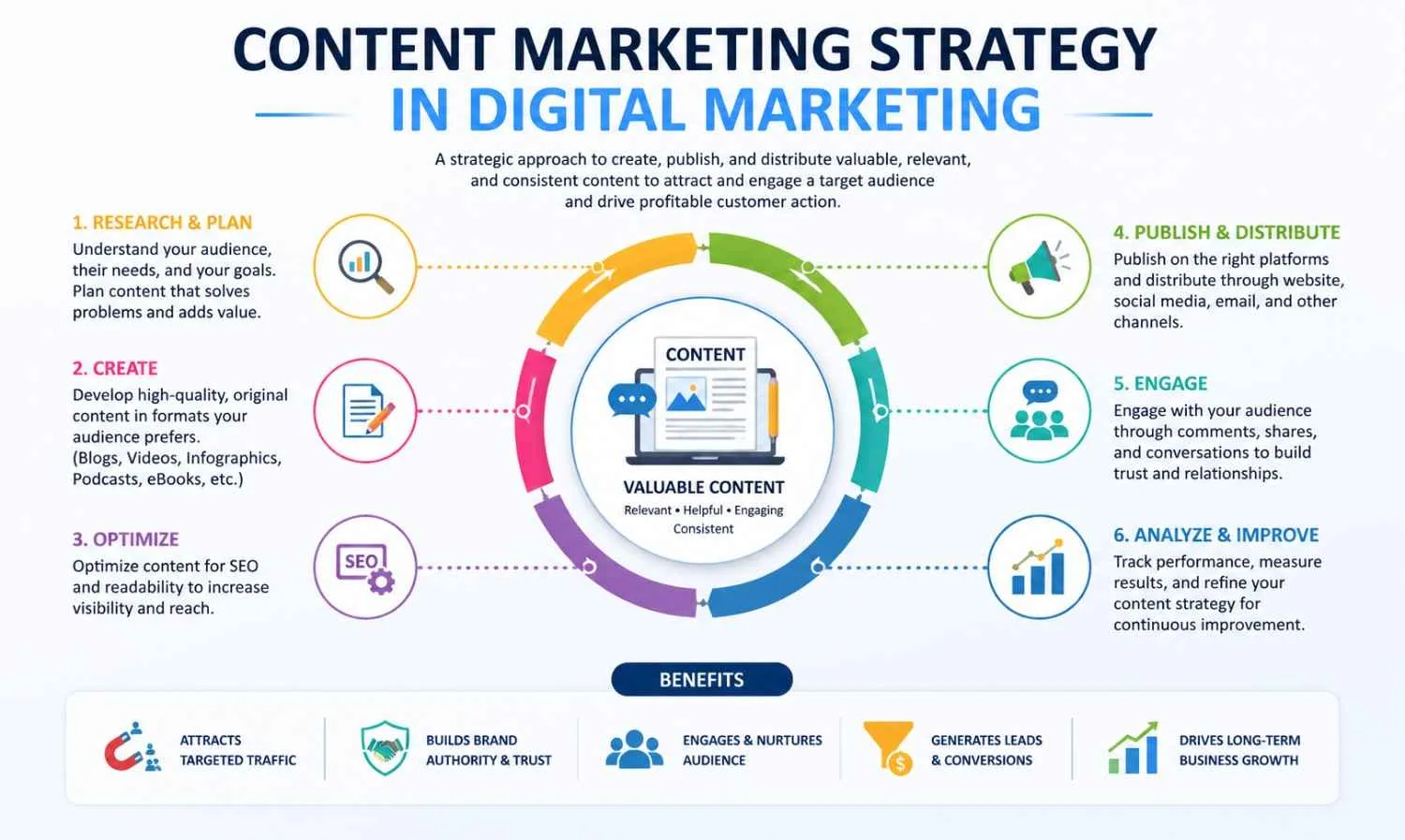
Formulating a content marketing strategy in digital marketing is a necessity. The modern marketing landscape requires investment in content marketing to generate visibility, develop authority in a specific market, and help potential customers develop a relationship of trust. If individual pieces of content (whether a video blog or a status update) are unique and creative, business objectives are achieved, and they build your reputation as a trusted niche expert specialist. If content is developed without a strategy, these pieces will feel like scattered and ineffective attempts that are both frustrating and costly.
Content marketing aims to position a business as a trusted niche expert specialist. A business that adds value through problem-solving is a business that customers feel confident purchasing from. All stakeholders (whether owners of small businesses, enterprise SaaS businesses, or e-commerce businesses) need to work on a content marketing strategy that preserves resources while generating profitable growth.
Key Components of Content Marketing Strategy
- Content
- Target Audiences
- Goals & Objectives
- Content Audit
- Content Strategy
- Content & SEO
- Distribution
- Marketing
- Performance Analysis
- Content Updates
- Content Marketing Trends
- Content Marketing Case Studies
- Content Marketing FAQs
- Content Marketing & Digital Marketing
Audience
Your content marketing strategy in digital marketing should focus on audience and customer needs. Content developed without an understanding of audience and customer is likely to be ineffective and may even damage your brand.
Target Audience Segmentation
- Market Research
- Audience Segmentation
- Demographics
- Psychometrics
- Market Research
- Behavior Analysis
- Motivation Analysis
Gap Analysis: Needs & Wants
- Target
- Content Marketing Strategy
- Competitive Positioning
- Content Marketing Standards
- Marketing Innovations
- Content Updates & Trends
Utilize Google Analytics, Facebook Audience Insights, Hotjar, and other tools, alongside customer surveys, to collect data. Structure your audience based on the data and address their needs to provide the appropriate content.
Understanding Preferences
Some audience segments prefer to skim and read simple, implemented guides spread across social media. Other segments consume more long-form content and may prefer to consume content like webinars and podcasts. Knowing your audience’s consumption trends will help with strategies on:
- frequency of content to be published
- optimal formats to be used
- most suitable outreach channels
Pro-tip: Use different audience personas. For instance, segments like the young workforce may absorb content more effectively from bite-sized video formats in TikTok and Instagram compared to content meant for more strategic audience segments like managers.
Planning and Setting Goals
Substantial content marketing in the digital marketing space must be structured and planned while incorporating measurable indicators for tracking and justifying the marketing spend.
Goal Structure
Specific, measurable, achievable, relevant, and time-bound (SMART) goals provide a more effective structure and indicator for tracking the achievement of objectives.
An example of a measurable goal as compared to the more abstract and less effective goal of “increase website traffic” may be:
“In the next 6 months, write and publish 2 SEO optimized blogs aimed at increasing organic traffic by 25%.”
Goal Alignment
- Brand Awareness: shareable visual elements for social media in videos and infographics
- Lead Generation: White papers, eBooks, gated content, and webinars
- Customer Retention: tailored content, updates, and email newsletters
Goal alignment and business objectives within the marketing course are likely to shift, so be sure to incorporate time periods for planned revisions from the original plan.
Content Audit
Content audits are a necessary first step for organizations to assess their existing gatekeeping and offer stretched opportunities that are necessary for a more relevant content strategy.
Identifying Gaps and Opportunities
- Keyword research to find audience behavior
- Competitive analysis of strengths, weaknesses, and opportunities
- Gathering consumer feedback on unmet needs
Benchmarking Against Competitors
- Identify industry and market trends
- Set achievable outcomes
- Create enthusiasm for your differentiated product
Tools like SEMrush, Ahrefs, and BuzzSumo help identify content gaps and performance benchmarks.
Creating a Content Strategy
Determining strategies goes beyond sophisticated and thin-margin bets; your business and your content can achieve so much and go a long way.
Choosing Content Types and Formats
- Blogs
- Videos
- Infographics
- eBooks & Guides
- Podcasts
Tip: There is a diverse choice for your audience type.
Creating a Content Calendar
Schedule your content to meet the audience where it is; frequent audience engagement promotes business growth.
Pro Tip: Use calendar management tools to efficiently plan content.
Balancing Quality and Quantity
Burnout should be avoided, but the content should prioritize impact.
Content Creation and Optimization
Going halfway is not where you should draw the line; to reach your audience you should be fully prepared.
It’s a balanced wager for content to meet the stylistic demand and the audience reach.
Optimization Checklist
- Titles
- Descriptions
- Headers
- Image alt text
- Mobile-friendly formatting
Remember: Long-tail keywords are more effective than general keywords and yield more valuable traffic.
Optimize for Engagement and Sharing
- Make content actionable and interesting
- Add sharing buttons
- Include clear calls to action
- Encourage comments and interaction
Distribution and Promotion
An effective promotion and distribution plan should be focused on to have a good digital marketing plan.
Distribution Channels
- Social Media Networks (LinkedIn and Instagram)
- Paid Ads
- Collaborations
- Email Newsletters
Promotion Strategies
- Content Syndication Platforms
- Influencer Collaboration
- Multi-Channel Promotion
Best Tip: Test different strategies to identify what drives the highest engagement and conversions.
Performance Monitoring and Measurement
Improving content marketing relies on performance monitoring.
Key Metrics
- Page duration, exit rate
- Social media engagement
- Goal completion rates
- Google Analytics performance
- HubSpot metrics
- Social media dashboards
Strategy Adaptation
- Analyze content performance
- Track delays
- Identify audience trends
- Adjust strategy based on data
Keeping Content Fresh: Maintenance and Updates
- Update old articles, guides, and videos
- Reuse high-performing formats
- Adjust content based on audience needs
Pro tip: Perform quarterly content audits to maintain SEO effectiveness.
What is the Future of Content Marketing?
- Storytelling through video and interactive content
- AI and automation for personalization
- Focus on sustainability and social responsibility
- Emerging platforms: TikTok, Clubhouse, LinkedIn Spaces
Pro tip: Stay updated with analytics and audience behavior trends.
Cohort Studies: 5 Actual Illustrations of Achievement
- Samantha, Bakery Owner: 300% increase in Instagram audience
- Ravi, SaaS Marketer: 45% increase in leads
- Emma, Lifestyle Blogger: 10x engagement
- David, Fitness Coach: 50k subscribers in 6 months
- Priya, E-commerce Manager: 2x increase in sales
FAQs
Q1: Content marketing, when will I see the results?
Your results will depend on the consistency of your content, 3 to 6 months strategy.
Q2: Can content marketing be done on a small budget?
Better to focus on organic, community, and value-driven content.
Q3: Content Marketing, how will I measure success?
Use analytics tools to assess leads, engagement, and audience growth.
Q4: Should I prioritize quality or quantity?
Quality builds impact.
Q5: Do I need a team for content marketing?
No, solo marketers can achieve results using tools and planning.
Q6: How often should I update content?
Every 3–6 months.
Q7: Can content marketing improve brand authority?
Yes, consistent valuable content builds authority.
Conclusion
Digital marketing is only successful when it is audience-based. Valuable marketing content along with informative promotions and post-marketing analysis will get you the success you desire when you always keep your content updated. By keeping updated, using modern data and trends, and listening to your audience based on the returns of your content, you can build a long-lasting positive and growing relationship with your audience. You can elevate your content to the next level through your own marketed content or with the help of a digital agency.
ABOUT THE AUTHOR
Content written by Saurabh Sharma
Saurabh is part of the expert content marketing team at ZoomIntoWeb. He has an expertise of curating meaningful information that can be used by visitors in general. Saurabh is also involved in creating client-specific stories and blogs.
