
Everyone can agree that every cloud project benefits from bug-free code. However, one of the biggest and most often overlooked challenges is managing unexpected cloud expenses. According to a 2023 survey, 69% of organizations reported overspending their cloud budgets by 15% or more, while over 20% of IT managers admitted they were unsure where a significant portion of their cloud spending was going. By 2026, global cloud spending is projected to exceed $723 billion.
If you do not understand cloud development costs before the coding phase even begins, your project could face major budget risks. This guide covers everything you need to know, including global developer pricing, cloud infrastructure costs, vendor comparisons, hidden expenses many teams overlook, and practical FinOps budgeting strategies.
By the end of this guide, you will understand how to estimate, optimize, and control cloud application development costs more effectively. As a general benchmark, cloud application development costs can range from around $10,000 for a basic MVP (Minimum Viable Product) to more than $500,000 for a large enterprise-grade platform. These costs depend heavily on developer location, cloud services used, project complexity, and operational efficiency.
What Are the Costs of Developing Cloud Applications?
The total cost of developing a cloud application includes every stage of the process, from initial planning and architecture to deployment and post-launch maintenance.
Unlike traditional software, cloud applications involve both fixed development costs and ongoing operational expenses that scale with usage. Cloud app development costs are typically divided into five major categories:
1. Development Labor
This includes the cost of:
- DevOps engineers
- Cloud architects
- UI/UX designers
- Backend and frontend developers
- QA testing teams
2. Cloud Infrastructure
Infrastructure expenses include:
- Compute resources
- Storage
- Networking
- Databases
- Load balancing
- Monitoring tools
3. Software Licenses and Development Tools
Common expenses include:
- IDE licenses
- API subscriptions
- CI/CD platforms
- SDKs
- Monitoring and automation tools
4. Security and Compliance
Security-related costs may include:
- Penetration testing
- SOC 2 audits
- HIPAA compliance
- GDPR compliance
- Security monitoring and governance
5. Post-Launch Operations
After deployment, ongoing costs include:
- Bug fixes
- Performance optimization
- Updates and feature enhancements
- Infrastructure monitoring
- DevOps management
Many businesses underestimate operational expenses and end up spending nearly double their initial development budget within the first year alone.
Cloud App Development Costs by Project Complexity
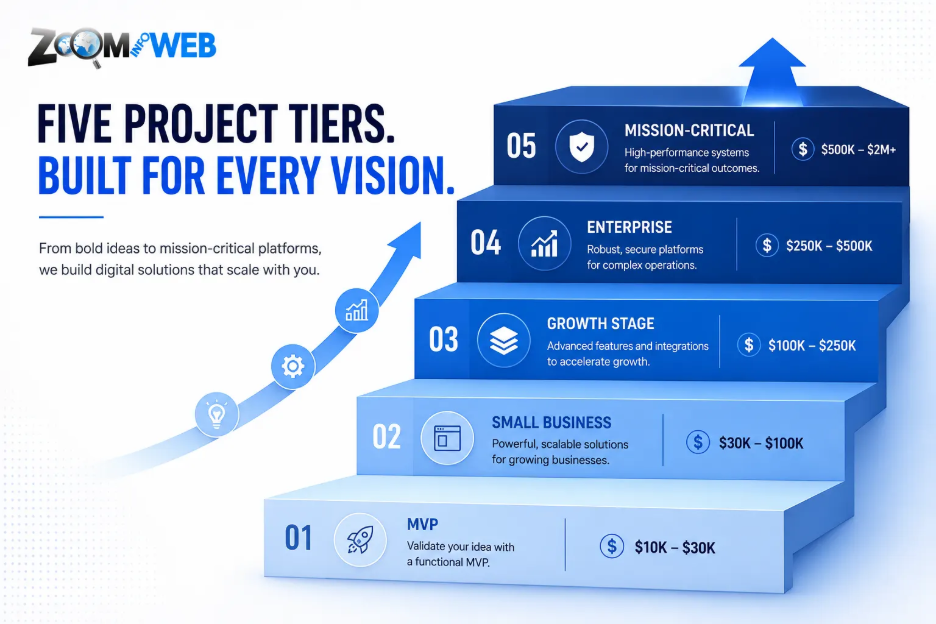
As project complexity increases, development costs rise significantly.
| Project Type | Estimated Cost (USD) |
| MVP | $10,000 – $30,000 |
| Small Business App | $30,000 – $80,000 |
| Mid-Market SaaS | $80,000 – $200,000 |
| Enterprise Platform | $200,000 – $500,000+ |
| Mission-Critical System | $500,000 – $2,000,000+ |
Offshore development can reduce overall development costs by approximately 40% to 60%.
Global Developer Rates for Cloud Application Development
The economic conditions of a country play a major role in determining cloud development costs. Below is a comparison of average hourly developer rates across major global markets in 2026.
| Region / Country | Junior ($/hr) | Mid-Level ($/hr) | Senior ($/hr) | Key Strengths |
| USA & Canada | $60 – $90 | $100 – $130 | $130 – $170 | Compliance-focused, enterprise projects |
| UK & Western Europe | $55 – $80 | $80 – $120 | $120 – $160 | GDPR-focused applications |
| Australia | $55 – $80 | $80 – $115 | $110 – $150 | APAC market expertise |
| Germany / Netherlands | $50 – $75 | $75 – $110 | $110 – $145 | Industrial IoT, automotive tech |
| Poland / Romania | $30 – $50 | $50 – $75 | $70 – $100 | High-quality outsourcing |
| Ukraine | $25 – $45 | $45 – $70 | $65 – $95 | Strong engineering talent |
| India | $15 – $30 | $30 – $50 | $45 – $65 | Large talent pool, cost-effective |
| Philippines | $15 – $25 | $25 – $40 | $40 – $55 | Startup-friendly outsourcing |
| Vietnam | $15 – $25 | $25 – $38 | $38 – $55 | Fast-growing tech market |
| Brazil / Colombia | $25 – $40 | $40 – $65 | $60 – $90 | Time-zone alignment with the US |
| South Africa | $20 – $35 | $35 – $55 | $55 – $80 | GMT-friendly outsourcing |
Hybrid Team Strategy
Many successful companies use a hybrid staffing model to balance quality and cost efficiency. In this approach:
- A small senior in-house team handles architecture, client communication, and strategic planning.
- Offshore junior and mid-level developers manage implementation and routine development tasks.
This model helps businesses reduce expenses while maintaining project quality and control.
AWS vs Azure vs Google Cloud: Cloud Infrastructure Cost Comparison
Your choice of cloud provider directly affects both development and long-term operational costs. Below is a comparison of pricing across major cloud platforms.
| Service Type | AWS | Microsoft Azure | Google Cloud (GCP) |
| Compute (8 vCPU VM) | ~$0.384/hr | ~$0.380/hr | ~$0.378/hr |
| Object Storage (per GB/month) | ~$0.023 (S3) | ~$0.018 (Blob Hot) | ~$0.020 |
| Managed PostgreSQL Database | ~$0.145/hr | ~$0.132/hr | ~$0.100/hr |
| CDN / Data Transfer (per GB) | ~$0.085 | ~$0.081 | ~$0.080 |
| Serverless (per 1M requests) | ~$0.20 (Lambda) | ~$0.20 (Functions) | ~$0.40 (Cloud Run) |
| Free Tier | ✅ Yes | ✅ Yes | ✅ Yes |
| Reserved Instance Discount | Up to 72% | Up to 72% | Up to 57% |
| Best For | Enterprises, broad service catalog | Microsoft ecosystem, hybrid cloud | AI/ML and data-intensive workloads |
Pro Tip
Committed-use discounts and reserved instances can dramatically reduce cloud costs over time. Businesses running stable workloads should consider long-term commitments to lower operational expenses and improve cloud budget predictability.
The Hidden Costs of Cloud Application Development
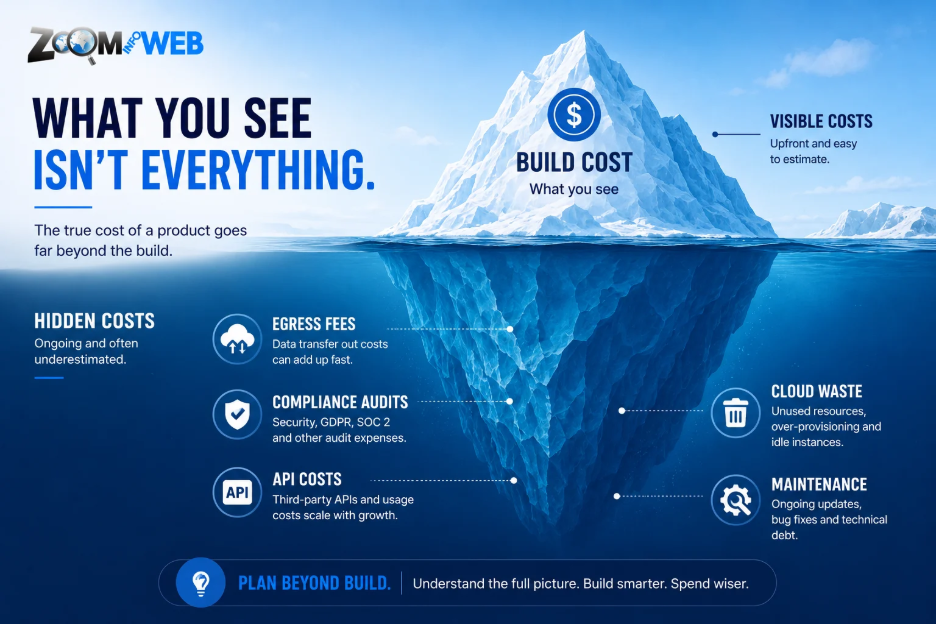
Unexpected expenses are one of the primary reasons cloud application projects exceed their original budgets. In many cases, hidden costs can increase the total cost of ownership (TCO) by 30% to 60%.
Understanding these overlooked expenses early can help businesses avoid financial surprises and maintain long-term profitability.
Data Egress Fees
Cloud providers charge fees for transferring data outside their networks. For global SaaS platforms handling millions of requests, data egress fees can quickly become a major operational expense.
Without proper traffic optimization and CDN planning, businesses may face thousands of dollars in unexpected monthly charges.
Security and Compliance Costs
Security breaches in cloud environments can cost organizations millions in damages, downtime, and reputation loss.
Compliance certifications and audits also require significant investment, including:
- SOC 2
- HIPAA
- GDPR
- ISO compliance
The cost of achieving and maintaining compliance typically ranges from $15,000 to $50,000 annually, depending on the complexity of the infrastructure and audit requirements.
Investing in security early is far more cost-effective than recovering from a data breach later.
Third-Party API Expenses
Many third-party tools appear affordable at the beginning but become expensive as applications scale.
Common examples include:
- Stripe / PayPal: 2.9% + $0.30 per transaction
- Twilio (SMS): Approximately $0.0075 per message
- Google Maps API: $200/month or more at scale
- SendGrid: Free initially, then $89.95/month or higher beyond 100,000 emails
As user volume increases, API costs can significantly impact operational budgets.
Cloud Waste
Research shows that approximately 32% of cloud spending is wasted due to:
- Over-provisioned resources
- Idle virtual machines
- Unused storage
- Poor infrastructure visibility
Additionally, over half of cloud waste is caused by insufficient cost monitoring and lack of resource tagging.
Implementing proper tagging and cost governance from the beginning can prevent unnecessary spending.
Team Ramp-Up and Knowledge Transfer
Migrating between cloud providers or onboarding new team members creates additional hidden costs, including:
- Training expenses
- Productivity loss
- Documentation gaps
- Legacy system migration challenges
These operational inefficiencies often increase development timelines and budgets.
Hidden Cost Checklist for Cloud Projects
Before launching a cloud application, ensure your budget includes:
✅ Data egress fees by region
✅ Third-party API costs at projected user volume
✅ Compliance and audit budgets (SOC 2, HIPAA, GDPR)
✅ Cloud resource tagging policies from Day 1
✅ Idle resource monitoring systems
✅ Disaster recovery and backup storage costs
How to Budget for Cloud Development Using the FinOps Framework
FinOps is a modern cloud financial management practice that helps organizations manage cloud costs with the same discipline used in software engineering. Today, approximately 63% of companies use dedicated FinOps teams or processes.
Here is a practical FinOps framework for managing cloud development costs effectively.
Step 1: Define Cost Units Before Development Begins
Before writing code, define measurable cost units such as:
- Cost per user
- Cost per transaction
- Cost per feature
- Cost per API request
This helps engineering teams align technical decisions with business goals and financial outcomes.
Step 2: Tag Resources from Day One
Use consistent cloud resource tagging practices from the start.
Recommended tags include:
- Environment (Dev, Staging, Production)
- Team ownership
- Feature name
- Cost center
Proper tagging provides instant visibility into infrastructure spending and simplifies optimization.
Step 3: Choose the Right Cloud Pricing Model
Different pricing models work best for different workloads.
On-Demand Instances
Best for:
- Development
- Testing
- Short-term workloads
Reserved Instances and Savings Plans
Best for:
- Predictable production workloads
- Long-term infrastructure
Potential savings:
- 40% to 72%
Spot Instances
Best for:
- Batch processing
- Fault-tolerant workloads
Potential savings:
- Up to 90%
Serverless Architecture
Best for:
- MVPs
- Variable traffic applications
- Event-driven workloads
Step 4: Set Budgets and Alerts
Use built-in tools such as:
- AWS Budgets
- Azure Cost Management
- Google Cloud Billing Alerts
Instead of setting alerts only at 100% budget usage, configure notifications at:
- 50%
- 80%
- 100%
This allows teams to respond before overspending occurs.
Step 5: Review Monthly and Optimize Quarterly
Regular cloud cost reviews help identify:
- Underutilized reserved instances
- Oversized compute resources
- Storage optimization opportunities
- CDN caching improvements
Quick Cost Optimization Tip
Properly resizing cloud instances can reduce infrastructure costs by 20% to 30%.
Conduct a right-sizing analysis within the first 30 days after launch. In many cases, a one-hour review can save thousands of dollars per month.
5 Proven Ways to Reduce Cloud Application Development Costs
1. Start with an MVP
Launching with a Minimum Viable Product (MVP) helps validate business ideas before heavy investment.
Typical MVP development costs range from:
- $10,000 to $30,000
Avoiding unnecessary features during the initial phase saves both time and money.
2. Use a Hybrid Development Team
A hybrid model combines:
- Senior onshore architects
- Mid-level offshore developers
For example, experienced developers in India or Eastern Europe often charge between:
- $30 to $50 per hour
This approach balances quality, accountability, and cost efficiency.
3. Use Managed Services Instead of Custom Development
Building custom systems for:
- Authentication
- Search
- Payments
- Email infrastructure
can require months of development.
Managed services such as:
- Firebase Auth
- Algolia
- Stripe
- SendGrid
can reduce implementation costs by 60% to 80%.
4. Use Serverless for Variable Workloads
Serverless infrastructure is highly cost-effective for applications with:
- Low traffic
- Seasonal demand
- Unpredictable usage patterns
Compared to traditional servers, serverless solutions can reduce costs by 40% to 70%.
5. Commit to Reserved Instances Early
If production workloads are stable, purchasing reserved instances early can significantly reduce long-term compute costs.
Potential savings:
- 40% to 72%
For many businesses, this is one of the fastest ways to improve cloud ROI.
Choosing the Right Cloud Development Partner
Selecting the right development model impacts both project quality and total cost.
| Development Model | Average Cost | Hiring Speed | Best For |
| In-House Team | $120–$170/hr | Slow (3–6 months) | Long-term products, core IP |
| Offshore Agency | $20–$50/hr | Fast (days to start) | MVPs, cost-focused development |
| Nearshore Agency | $50–$80/hr | Fast | Time-zone collaboration |
| Hybrid Model | $50–$90 blended | Moderate | Balancing quality and affordability |
| Freelancers | $25–$100/hr | Varies | Specialized short-term tasks |
For most growth-stage companies, the hybrid model offers the best balance between cost, quality, and scalability.
A common strategy is:
- Define architecture and business strategy onshore
- Execute development offshore
- Maintain strict documentation and code review processes throughout the project lifecycle
Frequently Asked Questions
Q1. How much does cloud application development cost in 2026?
Cloud application development Costs can range from approximately $10,000 for a basic MVP to more than $500,000 for a large enterprise-grade platform.
For most mid-market SaaS products, development costs typically fall between:
- $80,000 and $200,000
In addition to development expenses, operational and infrastructure costs can increase the total budget by an additional 20% to 30% over time.
Q2. Is cloud application development cheaper in India compared to the USA?
Yes. Cloud application development is significantly more affordable in India compared to the United States.
Typical senior cloud developer rates:
- India: $45–$65 per hour
- USA: $130–$170 per hour
This can result in cost savings of approximately 60% to 70%.
However, businesses should also consider:
- Project management efficiency
- Communication quality
- Time-zone coordination
- Technical expertise
- Long-term scalability
A well-managed offshore or hybrid team can deliver substantial cost advantages without sacrificing quality.
Q3. What are the biggest hidden costs in cloud application development?
Some of the most overlooked cloud development costs include:
- Data egress and bandwidth fees
- Third-party API costs at scale
- Security and compliance audits
- Cloud resource waste from over-provisioning
- Backup and disaster recovery expenses
- Post-launch maintenance and DevOps support
Compliance certifications such as SOC 2 or HIPAA can cost between:
- $15,000 and $50,000 annually
Additionally, industry reports suggest that organizations waste nearly 32% of their cloud spending due to poor visibility and unused resources.
Q4. Which cloud provider is the most cost-effective: AWS, Azure, or Google Cloud?
The most cost-effective cloud platform depends on your workload and business requirements.
AWS
Best for:
- Enterprise environments
- Broad service availability
- Large-scale cloud ecosystems
Microsoft Azure
Best for:
- Microsoft-based workloads
- Hybrid cloud infrastructure
- Enterprise integrations
Google Cloud Platform (GCP)
Best for:
- AI and machine learning
- Data-intensive applications
- Analytics-heavy workloads
All three major providers offer committed-use discounts and reserved pricing models that can reduce infrastructure costs by approximately 40% to 70%.
Q5. What is FinOps and how can it reduce cloud costs?
FinOps is a cloud financial management practice that combines:
- Engineering
- Finance
- Product management
Its goal is to optimize cloud spending while maintaining operational efficiency.
Effective FinOps strategies include:
- Resource tagging
- Budget alerts
- Usage monitoring
- Cost allocation
- Infrastructure optimization
Organizations that implement FinOps practices often reduce cloud costs by:
- 20% to 35%
In many cases, measurable savings can appear within the first month of implementation.
Final Thoughts
Cloud application development costs are not determined by a single factor. They are shaped by a series of strategic decisions, including:
- Cloud provider selection
- Team structure
- Infrastructure architecture
- Feature prioritization
- Cost optimization practices
The companies that succeed in cloud development in 2026 will not necessarily be the ones spending the most. Instead, successful organizations will focus on:
- Efficient cloud resource management
- Hybrid development strategies
- Smart pricing models
- Early-stage FinOps implementation
- Continuous infrastructure optimization
Creating an accurate cost estimate early in the project lifecycle is essential. Most businesses should also maintain an additional 15% to 20% budget buffer for unexpected operational and scaling expenses.
Most importantly, cloud cost optimization should be treated as an ongoing process rather than a one-time activity. Continuous monitoring, analysis, and optimization are key to maintaining long-term cloud efficiency and profitability.
ABOUT THE AUTHOR
Content written by — Saurabh Sharma
Saurabh is part of the expert content marketing team at ZoomIntoWeb. He has an expertise of curating meaningful information that can be used by visitors in general. Saurabh is also involved in creating client-specific stories and blogs.
Also Read, Unlocking the Power of Cloud Native Application Development for Startups
