
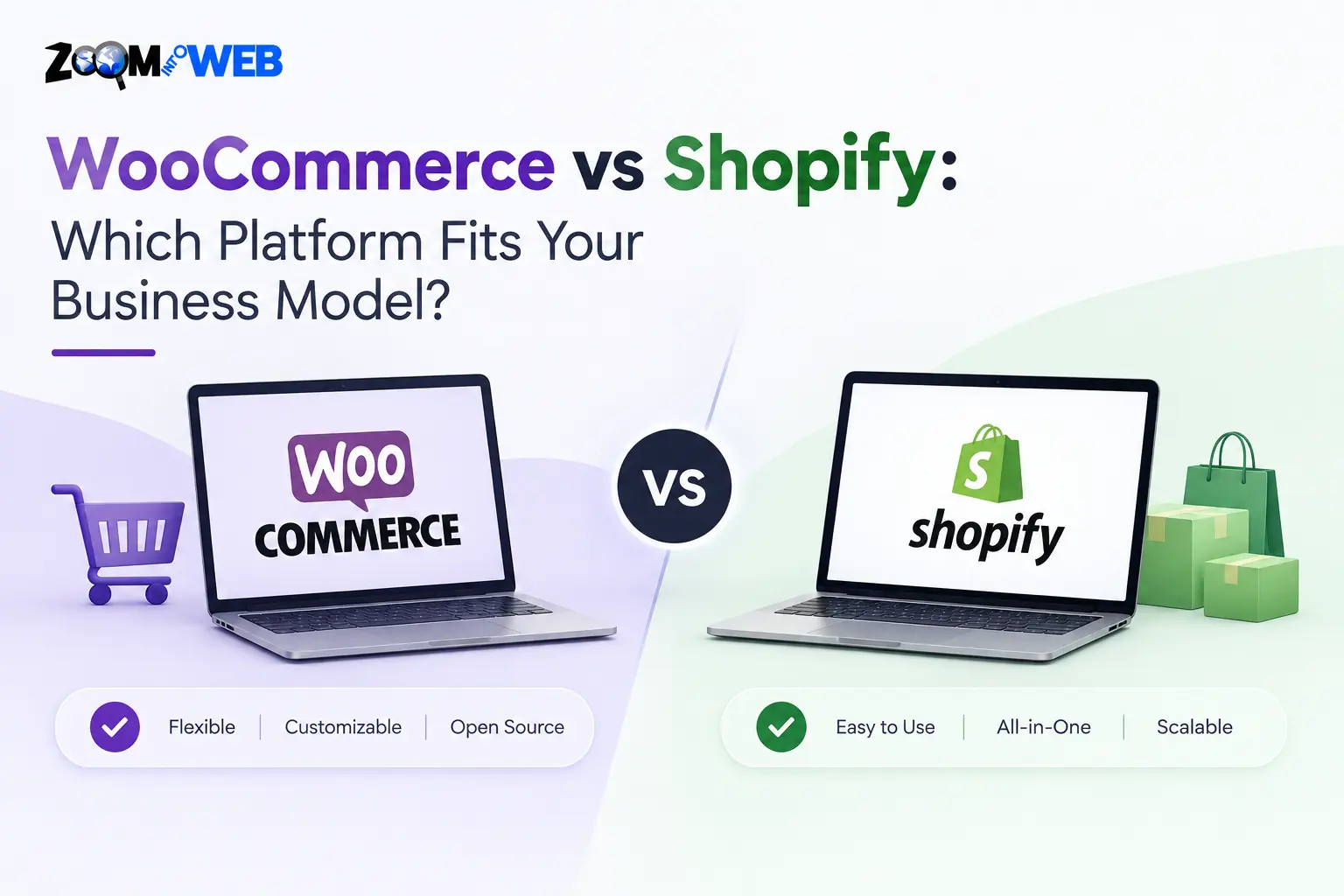
The e-commerce platform selected during the creation of an online store will play a critical role in shaping the store and its operations in all aspects, from website design to product management and payment systems. While both the WooCommerce and Shopify platforms are highly popular and effective in helping business owners create and maintain an e-commerce store, they have completely different approaches to e-commerce business.
Shopify is a hosted e-commerce platform that allows companies to get a ready-made online shop without too many technical skills. WooCommerce is a WordPress plugin that allows for total control of a website, its features, and customization. Which platform to select will depend on various factors, including a business model, budget, and plans for future growth of an online store.
To be able to make the right decision and find a solution for the needs of your e-commerce business, it is essential to learn more about the differences between the two platforms. Let Zoom Into Web assist you in analyzing your e-commerce needs and creating a solution.
WooCommerce vs Shopify at a Glance
WooCommerce and Shopify use different methods of conducting e-commerce activities. In the case of WooCommerce, it is a WordPress plugin that does not cost anything because it is free. However, other components like hosting, security, and themes must be arranged individually. It means that users have full control over how to build and customize their stores, but it can be quite complicated and may require some technical knowledge in certain cases.
In the Shopify case, it is a fully hosted e-commerce system, where hosting and infrastructure are provided as part of monthly subscription fees. It allows fast and easy setup of an online store even if you do not want to deal with technical issues of the site. At the same time, there are many opportunities to customize the design of your store with the help of themes and the app ecosystem.
The two different platforms have some differences in terms of handling content and business. WooCommerce operates in conjunction with WordPress, which makes it quite handy for those companies that need all of their blogs, content, and e-commerce in one single solution. However, while Shopify provides content marketing, its blogging options are not as developed as in WordPress.
It is also important to compare the cost factors of the two systems. WooCommerce does not require any license to use the platform, but you may pay for the hosting, premium themes, plugins, and other add-ons. Shopify uses a subscription pricing model, but you may have some transaction fees based on your payment structure.
What WooCommerce Actually Is (and Isn’t)
The difference is important because your e-commerce site, content, and website structure are integrated into the WordPress platform. In other words, there is no need to take care of the store separately; you manage products, pages, blog posts, and other elements of your website using one system.
Since WooCommerce operates inside WordPress, companies that heavily depend on content will find it convenient to have all their content and commerce actions integrated. A recipe website selling cookbooks, a coach with an online training program, or any niche business that sells specific products will use its website not only to attract visitors but also to convert them into customers. And here comes another strong point of WooCommerce.
At the same time, since WooCommerce provides you with control rather than automatic management of your store, hosting, security, backup services, software updates, performance tuning, and plugins should be taken care of separately. And the more customized your store will be, the more significant technical management will become. This is where the help of professionals, like specialists at Zoom Into Web, will come in handy.
What Shopify Actually Is (and Isn’t)
Shopify works differently from WooCommerce. In Shopify, the e-commerce platform is fully hosted, meaning that you do not have to organize anything else because the hosting will be done for you, as well as the SSL certificates and routine server maintenance. All you have to do is pick a plan and theme, upload your products, and set up your online store to get going.
It is obvious why this option is popular among businesses that want to get going with their stores as fast as possible and without worrying about managing a self-hosted platform. This way, all technical concerns will be managed by Shopify, while you will get the opportunity to concentrate more on your products and sales.
But there is a downside to this approach. You will be limited to a certain extent in terms of customization because your store will operate based on Shopify’s theme and app structure. For many e-commerce businesses, this might not be a problem at all. However, some complicated subscription models, custom B2B prices, strange checkout requirements, and content-oriented strategies might require something different from Shopify.
Is WooCommerce Cheaper Than Shopify?
However, “WooCommerce is free” can be misleading sometimes. While the WooCommerce plugin itself is free, operating the e-commerce store is associated with many expenses besides it. First of all, there is the expense of hosting, where the basic one is cheaper than the more expensive but faster and more secure one. In addition, it should be considered the cost of a domain name, as well as premium themes and extensions for some additional features such as shipping calculation, product bundles, membership, etc.
In turn, the Shopify system allows you to pay for a package of services such as hosting, security, and other infrastructure elements, which is more reliable, since you already know what the price will be in the future. Also, you can choose among different packages that allow you to get reporting tools, access for the staff, etc. The business owners who prefer annual billing may enjoy some discounts compared with the monthly plan.
Payment processing needs to be taken into account as well. Shopify will collect an extra transaction fee for transactions carried out using a payment gateway other than the built-in payment system. No transaction fee will be collected from the WooCommerce platform, and you can integrate any desired payment processor into the store. Nevertheless, it should be noted that payment processors will have their own processing fees.
The real price will vary depending on the way you organize and manage your online store. A simple, small store can be cheaper to maintain using WooCommerce, especially if you already have WordPress and a cheap web host. More complicated businesses with many apps, staff accounts, and other advanced features will probably find it easier and even cheaper to use Shopify in the long term. Let Zoom Into Web help you calculate the total cost of the e-commerce solution you are going to develop.
Which Platform Is Easier to Set Up?
The other platform that is easier to set up is Shopify. This is especially true for individuals who do not have any prior experience or those who wish to put their shop up without too much trouble. Shopify will handle all the hosting, security, and other underlying aspects; hence, one does not have to go through the hassle of selecting a host, setting up WordPress, configuring settings on servers, etc.
There are a number of procedures that have to be completed for setting up your online shop on WooCommerce. You will have to select a host, set up WordPress, set up WooCommerce, pick a theme and configure it, and then configure all the necessary elements like payments, shipping, security, etc.
That does not necessarily mean that WooCommerce is hard to operate. The good thing about WordPress is that it has a big community of tutorials, documentation, developers, and support that makes it easy for beginners to learn on the job. Nevertheless, the installation process takes longer and requires more work. If a fast and simple start is needed, then Shopify is a way to go, while WooCommerce works best for those willing to spend more time developing their website.
Apps, Plugins, and the Ecosystem Behind Each Platform
The point is that neither WooCommerce nor Shopify has all the features that will be needed by an expanding e-commerce business. They both use extensions to get additional features like advanced shipping, marketing, subscriptions, product options, analytics, customer management, and so forth. What is different about each platform is the way it implements its app ecosystem.
Shopify has a stricter and more integrated app ecosystem. It is possible to install an app usually with several clicks, which allows store owners to easily implement additional features without worrying much about the technical settings. At the same time, many Shopify apps require additional monthly or annual subscription fees aside from Shopify itself. With each new feature implemented, the costs can grow a lot.
The WooCommerce platform enjoys the advantages of the much broader ecosystem of WordPress plugins, providing companies with better choices in terms of customization. The majority of plugins are either free or one-time purchases, although subscription and premium versions are also widespread. While the greater flexibility brings greater responsibilities, some plugins from different vendors might be incompatible and interfere with each other, affecting the performance of your website, even the checkout process itself.
To prevent such situations, WooCommerce stores using multiple plugins require careful testing and maintenance. It is not uncommon for professional developers to test the plugins in a staging environment before installing them on a live store. If you need to manage this aspect of working with WooCommerce, Zoom Into Web will be glad to help you.
Scalability: Which Platform Grows With Your Business?
Selecting an e-commerce solution is not only about what fits right at the time of deployment. Instead, it should be considered in terms of the capacity of the platform to support your business in the course of its development. WooCommerce and Shopify can both scale up, but each does it differently.
With WooCommerce, you have more flexibility in relation to how the process of scaling goes. In particular, you are free to use stronger hosting services, work on your database, improve your infrastructure, etc. It is great when you need more control over your product listings, more content on your site, or more specific solutions in terms of e-commerce in general.
It becomes easier to scale when it comes to infrastructure through Shopify because Shopify controls hosting and the platform, meaning you do not need to upgrade servers and infrastructure when traffic rises. Businesses can also move up the Shopify plans as they advance. The downside to this is that you will always be working with the Shopify platform and what Shopify provides in terms of apps and customization.
Your decision is based on how your company is going to expand and what is needed. It is all dependent on whether you want to have a flexible solution and freedom to choose your tech stack or whether you would like to go with the managed platform. Zoom Into Web can assist you in analyzing the needs that you have and choosing a solution that will work well for you.
Selling Beyond Your Website: POS, Marketplaces, and Multi-Channel
For companies that sell their goods on more than one channel apart from their website, an e-commerce platform has to cater to multi-channel selling without complicating things. With a physical store, trade shows, marketplaces, and social media marketing as sales channels, there will be a need for managing products and inventory through all these channels.
One of the greatest strengths that Shopify has in multi-channel selling is the presence of its point-of-sale system, which integrates well within the Shopify environment and makes it easy for a business operating with both physical and online stores to manage products and inventory through one system.
In addition, WooCommerce can work with point-of-sale and multi-channel capabilities, though these features often come through the use of extra plugins or third-party solutions. This is an added burden but at the same time provides more freedom to pick appropriate solutions depending on your needs. For instance, a retailer who has a unique in-store process may need more flexibility to use a POS solution he needs.
Choosing the right solution depends on how your business sells. Shopify will be easier for businesses that value multi-channel capabilities, whereas WooCommerce is good for those who need customization. The latter can be arranged in such a way that you would be able to sell your products in several channels.
SEO Performance: Which Platform Actually Ranks Better?
There is no guarantee that either WooCommerce or Shopify will rank better through search engines. Both can achieve high rankings with the right structuring, proper optimization of technology, and great content. The only difference lies in the SEO control offered by both platforms.
WooCommerce offers more control when it comes to the site structure, URLs, content, and SEO technology. As WooCommerce uses WordPress, blogs and products have one website, and it becomes easy to develop a unified SEO strategy for content and commerce. Also, numerous SEO tools in WordPress can be used in WooCommerce.
Shopify provides a more straightforward SEO configuration process with many technical features taken care of on the hosted platform itself. This makes running your store much easier without having to worry about the complexities of hosting or server optimization. Businesses with more customized SEO needs may find WooCommerce more accommodating.
In summary, it all boils down to your SEO objectives as a business. For those who value content marketing and technical SEO, WooCommerce could be the better choice. For those who want to keep things simple, Shopify may offer more convenience. Zoom Into Web can assist you with optimizing both platforms for search success.
Which Platform Fits Which Business Model?
In conclusion, the choice of which platform will best suit your needs largely depends on the nature of your business and its requirements for its e-commerce website. The advantages of WooCommerce include its ease of integration with the preexisting website of your company or a blog or other content-based website. This platform is ideal if customization, complex checkout processes, or control of the website structure is required.
Shopify, on the other hand, is more appropriate if a quick launch of your website with the minimal use of technology is required. Physical retailers who require integration of both their offline and online activities and businesses that depend heavily on advertising, marketplaces, and social commerce find this platform beneficial.
Where SEO and organic content marketing play a major role in your growth plans, WooCommerce can be more flexible, given its WordPress-based nature. If you prefer to operate without any transaction costs at the platform level and integrate your own payment gateway without incurring any additional cost associated with WooCommerce, you might consider using WooCommerce.
In the end, both are winners. It depends on your business requirements. WooCommerce works well for those who seek more flexibility and control, whereas Shopify is more appropriate for those who focus on simplicity and fast implementation of e-commerce infrastructure. If you need help with making a choice, feel free to contact Zoom Into Web.
Final Verdict
There is no clear winner in the comparison of WooCommerce and Shopify. Select Shopify in case you require a fast launch, infrastructure management, and support services. Select WooCommerce in case you have more control over design, content, and customization needs.
It all depends upon your requirements and business plan in the end. If you find WooCommerce more suitable for you and require professional assistance, then you should consider contacting us at Zoom Into Web.
Frequently Asked Questions About WooCommerce vs. Shopify
Is WooCommerce actually free?
WooCommerce is free software, but having a store will cost you some money for hosting, a domain name, a theme, and extensions. Thus, when people say it’s free, what they mean is that the software itself is free.
Which platform suits beginners more?
Shopify suits beginners more because everything, including hosting, security, and infrastructure, is provided by the company. WooCommerce needs some effort to set up at the beginning but provides flexibility and control to users.
Which platform is cheaper overall?
It’s hard to give one definitive answer here. It depends on the needs of the business owner. If you have a small store and don’t require many features from the platform, then WooCommerce is the best choice.
Is it possible to change from Shopify to WooCommerce after that?
Yes. It is possible to migrate from one platform to another using migration software or developers. But the transfer of products, customers’ data, orders, and redirects has to be done with caution so as not to affect the process negatively.
Which one is better for SEO?
Both can work well in searches. WooCommerce gives more freedom for SEO via WordPress, while Shopify offers you an easier SEO process. In the end, the quality of SEO is what is important.
Written by the Zoom Into Web Team
This content was written by the Zoom Into Web team, combining hands-on experience in web development, software solutions, and digital marketing. We create accurate, practical, and up-to-date content to help businesses make informed technology decisions.

Comments are closed