
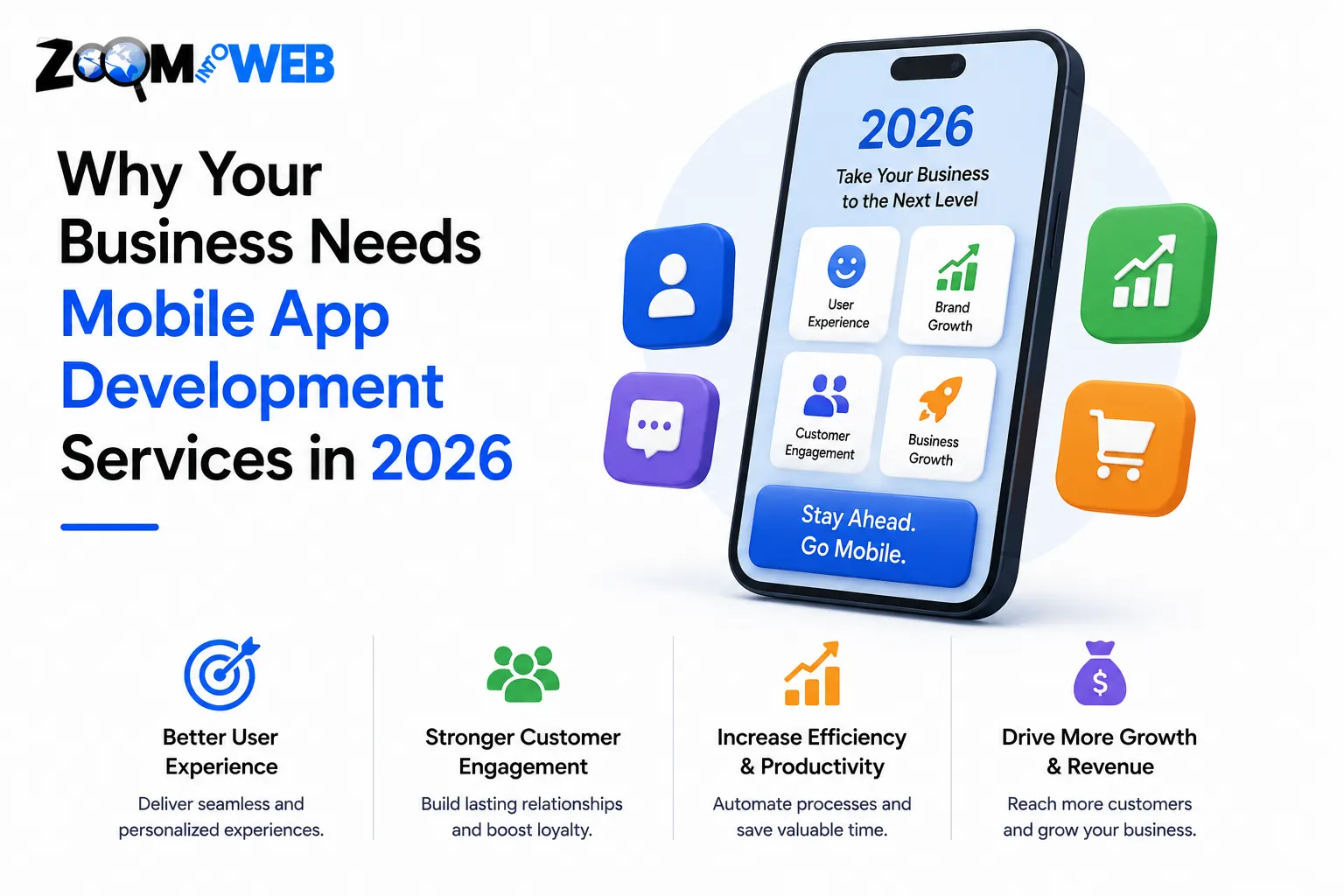
Mobile apps are not just accessories for big technology firms. For small and start-up businesses or growing brands as well as companies, an app that is well-designed could become a crucial tool for customer engagement in sales, operational efficiency, service provision, and even long-term growth of business.
Why does an organization require an app for mobile devices?
The most straightforward answer is that consumers are increasingly demanding that businesses offer fast, convenient, and personalized digital experiences. Mobile apps can provide customers access to your goods or services while giving you more control over communication with customers’ journeys and customer data along with digital interactions.
But creating an app just because other companies already have one isn’t enough. The best application development service will address the specific business issue and help achieve measurable goals like growing sales, improving retention of customers and automating processes, or establishing a new digital revenue stream.
For companies located in Delhi, NCR, India as well as international markets selecting a reputable Mobile app design firm will help transform the idea of a concept into viable digital product.
What Are Mobile App Development Services?
Mobile app development includes designing, planning and developing, deployment and maintenance for tablets and smartphones.
Based on the needs of the company an app may be designed to meet the following requirements:
- Android devices
- iOS devices
- Both Android and iOS
- Progressive Web Apps (PWAs)
- Internal business operations
- Services that are oriented towards customers
- Marketplaces and E-commerce
- SaaS products
- Field-service management and CRM
- GPS and other location-based applications
The company, Zoom Into Web, mobile app development encompasses hybrid, native and Progressive Web App solutions together with custom apps for portals, e-commerce, SaaS platforms, internal CRM systems, GPS tracking, and other business needs.
Why Does Your Business Need a Mobile App?
It’s not necessary for every business to have an application. However, if your customers regularly use your services, purchase items or book appointments, communicate with your team, monitor orders, or require access to your information, an app for mobile devices can be of great value.
Here are the top motives businesses invest in the development of mobile apps.
1. Improve Customer Engagement
Mobile applications create an immediate communication link between your company and its clients.
Instead of relying solely on social media, search engines or email for your advertising, your company can offer customers a customized digital experience.
Features like:
- Push notifications
- In-app messages
- Content that is personalized
- Programs to reward loyalty
- Product suggestions
- Reminders for appointments
- Tracking orders
Customers can be encouraged to engage with your business more often.
The main thing to consider is their relevance. Notifications must provide valuable information instead of being ad-hoc marketing messages.
2. Create a Better Customer Experience
Customers are looking for convenience.
A well-designed mobile application can cut down on the number of steps needed to accomplish common actions. For instance, an online user can search for the item they want and then add it to their cart, pay, and track an order without having to navigate through various websites.
Like a service company, it allows customers to make appointments, pay bills and request assistance, or talk directly with staff members via the application.
A great user experience can reduce friction and make customers more likely to come back.
3. Increase Sales and Revenue Opportunities
Mobile apps could create new opportunities for companies to generate income.
E-commerce apps can facilitate mobile shopping and personal suggestions. Service applications can facilitate the booking and payment process. A SaaS application will offer customers an access point to services that are subscription-based.
Apps may also provide support for:
- In-app purchases
- Subscription models
- Upselling
- Cross-selling
- Rewards for loyalty
- Special offers
- Repurchases
The aim should not just be to increase downloads. The most successful business apps should encourage users to take meaningful actions which support the business’s goals.
4. Strengthen Customer Loyalty
The cost of acquiring customers can be high. In this sense, keeping existing customers is crucial to sustainable growth.
Mobile applications help businesses create loyalty with individualized experiences such as reward programs and saved preferences, speedier purchase, membership benefits, and prompt communication.
For instance, restaurant owners could utilize an app to order loyalty points, personal promotions, and even repeat purchases. Retail companies could offer specific product recommendations, discounts, or tracking orders, as well as digital membership.
If an application consistently delivers the best value, users will find more reasons to keep coming back.
5. Build a Direct Marketing Channel
Social media platforms as well as search engines are excellent marketing tools; however, businesses don’t have total control over the platforms.
Mobile apps allow for an easier way to communicate with clients.
Companies can utilize apps-based communication to inform customers of:
- New products
- Special deals
- Events
- Appointments
- Order updates
- Rewards for loyalty
- Important announcements about services
It is more than just a tool for sales. It is a customer-facing platform.
6. Improve Internal Business Operations
Mobile apps aren’t just intended for consumers.
Businesses may also design internal mobile apps for sales teams, employee technicians and delivery teams, supervisors, and field personnel.
For instance, a field service application might allow employees to:
- Receive assignments
- View customer details
- Tracking the locations
- Check job status
- Upload photos
- Record service details
- Make reports
This will reduce the need for the manual process and increase transparency across teams.
Zoom into Web’s mobile application portfolio includes commercial applications that involve the tracking of sales, complaint control, GPS activity tracking, and SMS-based functionality that is automatic.
7. Collect Useful Business Insights
A mobile app can produce valuable first-party data on how your customers use your offering.
Companies can use information to analyze like:
- Frequently used features
- Product searches
- Purchase behavior
- Preferences of the customer
- Engagement patterns
- App retention
- Conversion behavior
These insights will help companies make better decisions regarding marketing, products, customer service, and future growth.
Naturally, any data collection should be done in a responsible manner and in compliance with any applicable privacy laws.
8. Gain a Competitive Advantage
In competitive markets, customer service can be an important factor in determining the success of a company.
An app for mobile devices can allow a company to provide features that competitors who do not have an app might not offer.
A company, for instance, might introduce:
- Real-time tracking
- Digital payment
- Personalized suggestions
- Support for customers 24/7
- Reward points for loyalty
- Self-service options
- Services based on location
The competitive advantage is derived from solving customer issues better and not simply by having an application.
What Types of Businesses Can Benefit from Mobile Apps?
The development of apps for mobile devices is important in a wide range of sectors.
Ecommerce and Retail
Businesses can offer mobile shopping, payment and loyalty programs, order tracking and personalized suggestions.
Healthcare
Applications may facilitate appointment booking, communication with patients as well as reminders, and even access to healthcare-related services.
Education
Educational companies can design applications to help students learn courses in assessment, communication, and even student management.
Logistics and Field Services
GPS tracking as well as delivery updates, job management and employee reports could assist in enhancing visibility for operations.
Real Estate
Real estate software can offer search results, property listings, leads management, location information, as well as customer communications.
SaaS and Technology Businesses
Mobile applications can expand an already existing software platform and offer more subscription or service options.
Internal Business Operations
Companies can develop customized CRM and employee management systems and sales tracking, as well as reporting and field-service software.
How to Choose the Right Mobile App Development Company
The choice of the right developer will have a significant impact on the performance of your app.
Before you hire a company to develop mobile apps for a firm in Delhi or anywhere else be aware of these things:
1. Relevant Experience
Check out the portfolio of your company and search for applications that match your requirements for business.
2. Technical Expertise
Find out if the development team is familiar with Android, iOS, cross-platform frameworks, APIs cloud infrastructure databases as well as integrations and security.
3. UI/UX Capability
A functional and technically effective app could fail if users are unable to use it. Usability and design must be considered in the process of development.
4. Development Process
Learn the way that the company handles discovery of Wireframing, wireframing and design development testing, deployment and post-launch assistance.
5. Scalability
Your application must be able to expand as your company expands. Discuss the future features, users as well as integrations and infrastructure requirements prior to when the development process starts.
6. Post-Launch Support
Mobile app development doesn’t stop when the app is released. Updates of bugs, security fixes, bug fixes, OS compatibility, monitoring and feature enhancements could be needed over time.
Zoom Into Web describes its method as being client-focused that works with customers from the beginning of consultation to launch and continue to update as well as support and additional features when the application develops.
How Much Does Mobile App Development Cost?
There is no cost for developing mobile apps.
The total cost is based on a variety of factors, including:
- App complexity
- The number of platforms
- The UI/UX requirements
- The number of features
- Backend development
- Integrations from third parties
- Payment gateways
- GPS function
- Admin dashboards
- Security needs
- Testing
- Support and maintenance
A basic business application could require a lot less development than a more complex ecommerce market, SaaS application, platform or software.
Instead of selecting the development firm based solely on the lowest price, business owners should look at the anticipated ROI (ROI) as well as scalability, security, quality, and the need for long-term maintenance.
What Is the Mobile App Development Process?
The development procedure generally comprises the following steps:
- Plan and Discovery: Determine the intended users, goals for the business technologies, features, and success measures.
- UX/UI Design: Wireframes, user flows, prototypes, and visual designs.
- Development: Create the frontend, backend APIs, databases, integrations, and other required functions.
- Testing: Test the performance of security, usability, and compatibility across the relevant devices.
- Installation: Create the application to be available on the Google Play Store, Apple App Store, or other appropriate distribution channel.
- Maintenance: Check the application and fix any issues, then release updates, increase security, and introduce new features.
This approach is structured and minimizes the chance of creating an application that does not have a clearly defined business objective.
Mobile App Development Trends to Watch
Applications for mobile devices continue to develop as new technologies are developed and become more commercially viable.
Artificial Intelligence
AI can help with personalization recommendations, automated systems and conversational interfaces, as well as images recognition and smart business workflows.
Cross-Platform Development
Technologies like Flutter and React Native can help businesses create apps for a variety of platforms while sharing substantial portions of the codebase according to the requirements of the project.
Progressive Web Apps
PWAs allow web access with app-like experience and are useful for businesses who need to reach a wider audience without having users to install an application.
IoT Integration
Mobile apps are used as interfaces to connect devices to industrial equipment, smart devices, as well as various other IoT environments.
Location-Based Applications
GPS technology can be used to support delivery tracking, field-service management for sales-team monitoring, navigation, and provide location-aware experiences for customers.
The appropriate technology must be selected based on specific business needs rather than just following the latest trend.
Why Choose Zoom Into Web for Mobile App Development?
Zoom Into Web is a digital services company based in Delhi in India and Canada. According to their company’s website, it was established in 2009 and boasts an average of 16+ years of expertise, with more than 200 websites and applications designed for clients in a variety of countries.
The mobile app development services encompass Android along with iOS applications Native and hybrid design, Progressive Web Apps, portals, ecommerce apps, SaaS applications, internal CRM applications, GPS tracking solutions, and mobile app development that is custom.
The portfolio that the company has published includes projects for companies like SIMON or Delhi Police, including sales tracking, management of complaints from technicians, GPS activity tracking, and mobile-based communication applications.
If you are a business seeking a developing mobile application business in Delhi the combination of technical expertise along with business-focused development and expertise across various types of applications could be the perfect combination to make Zoom Into Web a potential development partner.
Frequently Asked Questions About Mobile App Development
Does every business require an app that is mobile?
No. An app for mobile is valuable if it solves a real business or client issue. Businesses must consider their target market goals, their objectives, anticipated usage, budget, and ROI potential prior to investing.
Can mobile app development be helpful for startup companies?
Yes. Startups can utilize mobile apps to create digital products, test business models, communicate with customers, automate services, and build flexible technology platforms. The initial version should concentrate on the most crucial customer and business needs.
Do I need to build the app for an Android application instead of one for iOS? iOS app?
The answer is contingent on your intended customer, the market, your financial model, and product specifications. If your customers utilize the two platforms, multi-platform development could be a viable option.
How long will it take to create a mobile application?
The time to develop a new application varies greatly based on complexity. A simple application may take considerably shorter time to develop than an enterprise-level application with custom backend systems integrations, payments, GPS dashboards, and advanced security.
What is the best way to choose the best mobile app development firm in Delhi?
Examine relevant experiences and the quality of your portfolio’s technological capabilities, UI/UX knowledge and development process, as well as security, communication practices, transparency of pricing and post-launch support.
Final Thoughts
Mobile app development isn’t just about placing your business on the smartphone. An app that is successful will help make things simpler, quicker and more efficient, or even more beneficial for your employees or customers.
From increasing customer loyalty and engagement to boosting sales and efficiency, automating operations, capturing information from business, and generating brand new services in digital form, mobile apps can support many areas of business expansion.
The most crucial step is to choose the most appropriate method of development. Before creating an application, you must clearly define the issue you wish to address, the customers you wish to serve, and the features they require, as well as the expected business outcomes you want to achieve.
If your company is in the process of turning an idea for a mobile app into a viable digital product Working with a seasoned Mobile app design firm will help you transition from UI/UX planning to testing, development, launch, and continuous improvements.
For companies in Delhi, NCR, India and other markets around the world, Zoom Into Web provides mobile app development services that are designed on specific business goals and requirements for users.”
Written by the Zoom Into Web Team
This content was written by the Zoom Into Web team, combining hands-on experience in web development, software solutions, and digital marketing. We create accurate, practical, and up-to-date content to help businesses make informed technology decisions.
