
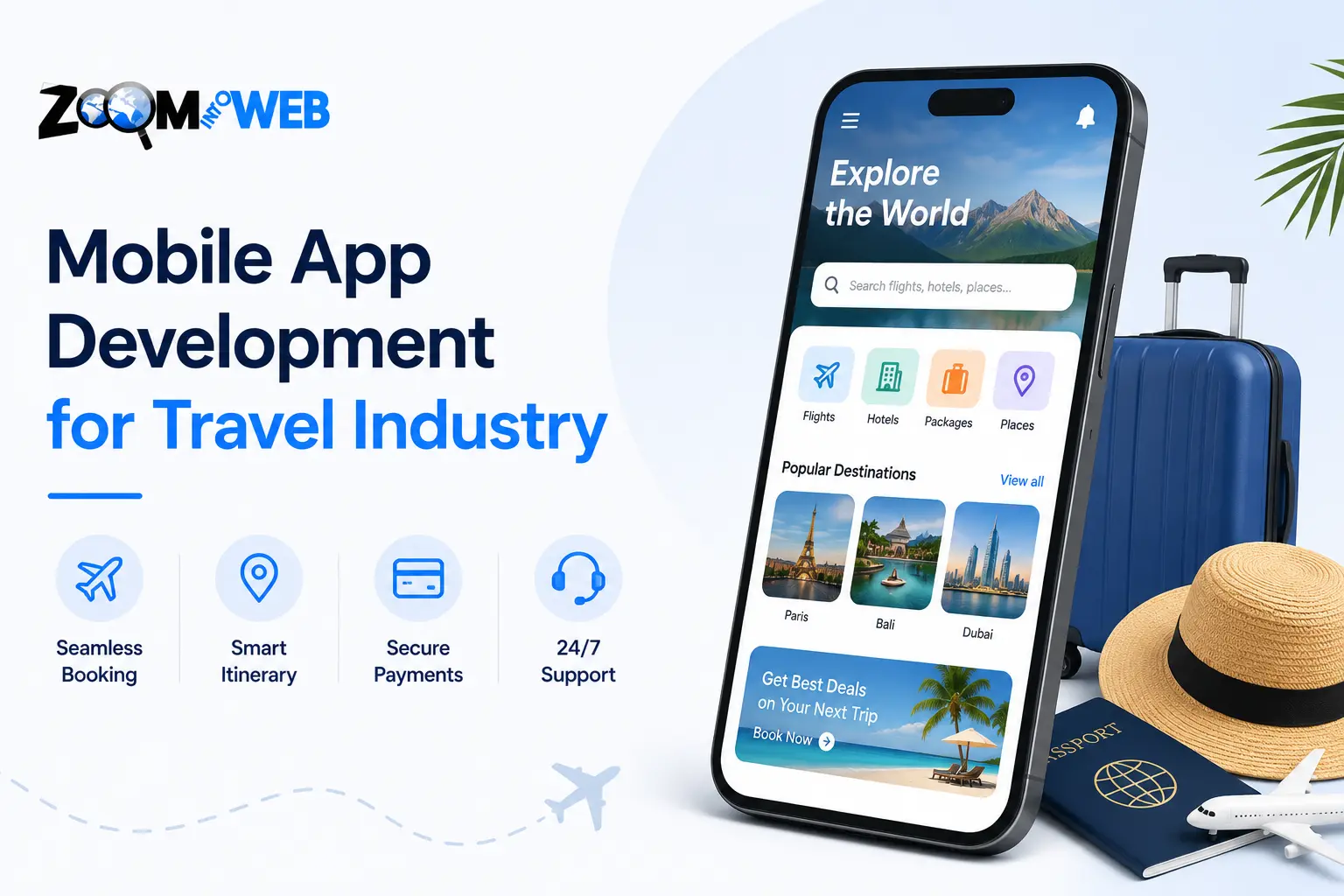
Introduction
There has been a clear development and evolution of the travel industry over the past ten years. The use of travel agencies is no longer the only way to make travel arrangements. The internet was the primary way to book flights and hotels. Now, travelers have everything they need to plan their travel on one device. These personal travel assistants help travelers search for destinations, compare and book flights, make and pay for hotel reservations, find attractions, and even help navigate through unfamiliar cities. They also help with real-time updates and travel alerts.
Because of this type of consumer behavior, travel agencies, tour operators, hotels, airlines, car rentals, travel businesses, and travel start-ups need Mobile App Development for Travel Industry. A mobile app helps agencies and businesses gain more reservations, more customers, and more revenue opportunities through the use of mobile apps. Customers gain better mobile experience and a more reliable mobile app.
Travelers want mobile apps to be fast, convenient, and tailored to them. They also want to feel secure when using the apps. Apps that are not mobile get left behind by more advanced and user-friendly competitors.
This guide explains the travel app, the benefits for the user and the developer, the different types of travel apps, the most important features, and the new and upcoming technologies. It also explains the importance of travel apps and why 2026 and even beyond is a great time to invest in a travel app.
What is Mobile App Development for the Travel Industry?
Mobile App Development for Travel Industry refers to the designing, developing, and maintaining of mobile apps that assist and simplify planning, booking, and navigating travel. These mobile apps also assist businesses and help engage customers. Mobile apps can be developed for the Android and/or iOS operating systems to assist travel businesses.
Mobile travel applications offer many features to the user:
| Mobile Travel Application Features |
| Destination search |
| Booking options for flights, hotels, etc. |
| Purchasing vacation packages |
| Itinerary planning |
| Online payment |
| Access to boarding passes |
| Notifications |
| GPS |
| Reviews |
| Support chat |
Mobile apps make powerful platforms for businesses because they automate business processes, facilitate communication with customers, and generate revenue by eliminating intermediary bookings.
Customer expectations have changed, and services need to be offered by mobile apps. Think of someone looking to plan a weekend vacation. They no longer need to go to 5 or more different websites. In the span of only a few minutes, they are able to search for and book flights, find hotels, book things to do, and receive custom suggestions.
Now, here are some things to know about why travel mobile apps are a good idea.
Booking through mobile apps is becoming the norm
Travel bookings are primarily done via mobile devices. Websites do need to be responsive, but mobile apps done right are faster and much more convenient.
Customer Experience
Travel information is consolidated for users and makes it easy for them to manage their bookings and receive notifications.
Customer Loyalty
Mobile apps allow companies to create long term relationships through
- Loyalty programs
- Reward programs
- Targeted discounts
- Push notifications
- Offers
All these things create repeat business and better customer retention.
Direct Communication
More instant methods of communication eliminate some of the cumbersome aspects of email. Travelers can be notified directly of things like:
- Flight delays
- Booking Confirmations
- Check-in Notifications
- Travel Warnings
- New Deals
Higher Revenue
A mobile app streamlines the booking process, making it less difficult and increasing the likelihood of a booking. Furthermore, apps can be monetized through premium services, sponsored content and advertisements, and affiliate marketing.
Benefits of Mobile App Development for Travel Businesses
Both businesses and travelers experience the benefits of a tailored travel app.
Improved Booking Experience
Travelers can book all aspects of their travel in just a few minutes, all in one app.
Personalized Recommendations
Modern apps can analyze a user’s preferences and make recommendations. Travel apps can suggest
| AI-Powered Recommendations |
| Travel Destinations |
| Hotels |
| Dining Options |
| Attractions |
| Events |
This level of personalization and ease leads to higher satisfaction and subsequently, higher travel app usage.
Real-Time Travel Updates
Travel itineraries can change at a moment’s notice. Apps can be used to notify travelers of things such as:
| Real-Time Notifications |
| Flight Delays |
| Gate Changes |
| Weather Notifications |
| Check-In Updates |
| Visa Notifications |
| Travel Alerts |
Better Customer Support
Advanced mobile apps can easily integrate chatbots and live support.
Customers can:
- Easily Cancel, Change, or Refund Reservations
- Find Services
- Report Issues
Stronger Brand Recognition
Consistent use of an app leads to a consistent brand presence.
Customers can offer feedback meaning valuable insights to the developer and brand.
Categories of Travel Mobile Applications
Every category of travel mobile applications uses a different technology stack. Knowing how many different categories of travel mobile applications can help us better identify the best solution for our business.
Flight Booking Apps
Flight booking apps let travelers do a lot of things. Some of those things are:
| Flight Booking App Features |
| Search for flights |
| Compare prices |
| Book seats |
| Find the status of the flights |
| Boarding passes for flights can also be downloaded from these apps. |
Examples of these apps include flight comparison apps, and apps that are specific to an airline.
Hotel Booking Apps
Hotel booking applications provide a convenient way to book a hotel. Hotel booking applications will often provide:
| Hotel Booking App Features |
| Availability of hotel rooms |
| Reviews of hotels |
| Virtual tours |
| Payment for a room can also be done online |
| Some of these apps offer digital check-in and loyalty rewards |
Travel Experiences Booking Apps
Travel Experiences Booking Apps let user’s book:
| Travel Experience Booking Options |
| Sports |
| Tour tickets |
| Tickets for museums |
| Cruise packages |
| Safaris |
| Tours |
| Workshops |
Travel Planning Apps
These applications are used to plan an entire trip. Apps that fall into this category usually offer the following features:
| Travel Planning Features |
| Daily itineraries |
| Budget planning |
| Packing checklists |
| Reminders |
| Travel and calendar integration |
Navigation Apps
Navigation apps allow users to better explore an area. These apps will usually offer:
| Navigation App Features |
| An offline map |
| GPS Navigation |
| Local tourist attractions |
| Restaurants and places to eat |
| Public transportation |
| Emergency contact information |
Rental Car Apps
Rental car apps allow travelers to:
| Rental Car App Features |
| Compare and choose different cars |
| Book the car of choice |
| Submit a a digital copy of their driving license |
| Pay online |
| Track the rental |
Travel Marketplace Apps
Marketplace travel apps are the most diverse category of travel apps in that they combine many services in the travel space. These apps allow users to:
| Travel Marketplace Features |
| Book flights |
| Reserve hotels |
| Rent cars |
| Purchase travel insurance |
| Buy tickets for attractions |
| Book airport transfers |
The sheer number of offerings in a single app makes this category the most convenient from the mobile travel app category.
Essential Features of Travel Apps
Successful travel apps do not start and end with good design. Travel apps solve problems for travelers and make the entire travel process seamless and smooth.
Here are some essential travel app features.
User Friendly Sign Up
To simplify user registration for the app, design the interface to accept a user’s email, phone number, or allow to sign up via any of their social media accounts. Also allow them to sign up via their Google or Apple accounts.
The easier and more streamlined the sign-up design is, the more users the app will have, and the less likely they are to abandon the app.
Refined Search Options
Travelers may often have to sift through app lists of expensive options that include travel accommodations, hotels, and activities. With comprehensive search features, travelers can search based on budgets, locations, dates, travel and activity distances, ratings, and the amenities.
Comprehensive Search Filters
To search for and find the best travel options that accommodate their needs and preferences, travelers need comprehensive search filters.
Secure Payment Options
We all want to make travel arrangements and plans with an app we can trust. A secure app will have all options for payment covered, including credit and debit cards, digital wallets, net banking, UPI, and international payment options and gateways.
Trust will be earned when security is prioritized.
Push Notifications
Push notifications will help users remember their bookings, but users will also appreciate and be engaged with travel offer notifications, price drop notifications, and travel updates.
GPS and Location Services
Travelers are often in unfamiliar places, and distance services are helpful in locating attractions, restaurants, and places of emergency, as well as help Travelers navigate a city and locate a service or transportation.
Reviews and Ratings
Booking decisions are often based on reviews. For the sake of future Travelers, support user reviews and ratings of services.
Multi-Language Support
Offering multiple languages will not only make your app more user friendly and increase your user base, but it will also make your app more accessible.
Offline Access
Travelers may not have access to the internet during travel.
Features Available Offline
The following features of our app will be available offline:
| Offline Features |
| Booking confirmations |
| Maps |
| Itineraries |
| Tickets |
| Hotel addresses |
| Emergency contact information |
It will be especially useful to our customers who travel internationally, as it will be even more dependable.
Suggestions Powered by AI
Analyzing user patterns with AI can give suggestions for:
| AI-Powered Suggestions |
| Destinations |
| Hotels |
| Travel Packages |
| Restaurants |
| Attractions |
| Offers |
The suggestions will be personalized. With a higher level of satisfaction, customers are more likely to complete a booking.
Features for Travelers
Implementing features to support travelers will foster more trust.
Travelers will be supported with:
| Traveler Support Features |
| Live Chat |
| AI Chatbot |
| Voice Assistance |
| Phone Assistance |
| Email Assistance |
Supporting an FAQ will help customers more quickly resolve their issues. This will create customer satisfaction and foster loyalty.
Importance of User Experience
The best travel apps do more than provide great travel features. The most important part of a good travel app is that it makes travel easy. A travel app is often used in a hurry, in an unfamiliar location, and may even be used when there is little or no internet access. In these situations, a slow or cluttered interface may cause an abandoned booking.
Most travel apps fail to follow the following basic standards.
| User Experience Standards |
| Easy Navigation |
| Speed |
| Fewer Steps to Complete an Action |
| Clear, Large Action Buttons |
| An Interface that is Useful for All Users |
An app with a focus on User Experience will convert more users and will be used repeatedly.
The travel app development process: an overview
The development of a useful travel app does not end with writing the code. It involves a lot of planning, making some critical business decisions, acquiring the right technologies, understanding the traveling public as well as the competitor, and designing an app that provides a consistent and seamless experience irrespective of the device being used. An organized development process aims to lower business risks associated with Mobile App Development for Travel Industry and provides an avenue to launch a travel app that has the potential to grow and optimize its performance.
Market research and business analysis
The first step should provide an understanding of who the app users will be, who the competitors are, what problems the competitors are solving, which features your competitors have that you don’t, and what differentiates your app as well as your travel business. You should establish the business model, goals, and type of travel app you want to create.
UI and UX
Travel apps that are intuitive and aesthetically designed are more likely to be engaging and result in higher booking conversions. The designers will create the user journey, wireframes, prototypes, and UI designs at this stage of the development. Designing an app that has a simple and fast booking process should be the focus.
App Development
At this stage, coding for either the iOS, Android, or both apps continues and includes development for:
| App Development Components |
| The app’s user interface |
| The app’s server or backend |
| Databases |
| APIs |
| Payment processing systems |
| Security systems |
A decision on whether to use native or cross-platform development will depend on the long-term goals of the business, the budget you have to work with, and the deadlines you are working with.
Testing and Quality Assurance
Reliability is the primary focus of the testing that an app undergoes prior to its launch. Testing will have the following focuses:
| Testing Areas |
| Functionality |
| Performance |
| Security |
| Usability |
| Compatibility across devices |
To provide an excellent app experience, it highly recommended that concerns that are raised because of the testing be resolved prior to your app launch.
Deployment and Launch
After testing, the application is provided to users via Google Play Store and Apple App Store.
An effective launch should incorporate:
| Launch Checklist |
| App Store Optimization (ASO) |
| Advertising campaigns |
| Onboarding |
| Customer support |
Maintenance and Continuous Improvements
The launch is not the end. To ensure the app is secure, and to implement new features, and to keep the app aligned with OS updates, regular builds are necessary.
Users expect new features and app performance improvements based on feedback, which also helps with retention.
Tech Stack Used in Travel App Development
Speed, security, and being able to scale are concerns during development that are tempered by using the right tech.
Front end Technologies
| Front-end Technologies |
| Flutter |
| React Native |
| Swift (iOS) |
| Kotlin (Android) |
Back-end Technologies
| Back-end Technologies |
| Node.js |
| Laravel |
| Django |
| .NET |
Databases
| Databases |
| MySQL |
| PostgreSQL |
| MongoDB |
| Firebase |
Cloud Platforms
| Cloud Platforms |
| AWZ |
| Microsoft Azure |
| Google Cloud Platforms |
Payment Gateways
| Payment Gateways |
| Stripe |
| PayPal |
| Razorpay |
| Apple Pay |
| Google Pay |
Travel App Development Basic APIs
External APIs add features and functionality without building them natively.
Today’s travel apps depend on integrations like:
Flight APIs
Provide
| Flight API Features |
| Flight schedules |
| Ticket pricing |
| Seat availability |
| Airline info |
Hotel Booking APIs
Allows users to
| Hotel Booking API Features |
| Search hotels |
| Compare prices |
| Check room availability |
| Make reservations |
Maps and Navigation APIs
Provide
| Maps and Navigation API Features |
| GPS and Navigation |
| Attractions |
| Optimized Routes |
Weather and Distance APIs
Weather APIs assist in Travel planning and disruptions.
Currency Exchange APIs
Display exchange rates for international travel.
Payment APIs
Enable travel app payment processing.
Revolutionizing Travel Apps with AI
AI is beginning to dominate the travel market by creating tailored and automated systems to respond to customer needs.
Better Options
Targeted suggestions for travel based on a customer’s history are available for:
| AI Recommendations |
| Locations |
| Accommodations |
| Events |
| Venues |
| Seasonal Deals |
AI customer tailoring leads to more customer bookings.
AI Bots
AI powered customer service bots operate 24/7 to respond to customer inquiries and assist with travel booking hassles.
Fluid Pricing
AI examines the shifting customer demand and changing seasonal trends to offer fluid pricing.
Customer Prediction
AI traveling systems use customer data to predict future travel, determine popular destinations, and focus on proactive marketing systems.
Technology on the Horizon for Travel Apps
Augmented Reality
AR gives travelers the ability to:
| Augmented Reality Features |
| View and move about a virtual travel location |
| Interact with virtual landmarks |
| Access historical data |
| Digital navigation aids to a travel location |
Virtual Reality
VR allows users to preview travel bookings and visit virtual tours of accommodations and entertainment venues.
Blockchain
The game changing technology of blockchain increases:
| Blockchain Benefits |
| Payment Safety |
| Trustworthy identity verification |
| Improved loyalty programs |
| Clear booking processes |
| Lowers fraudulent bookings |
Internet of Things
Travel apps are IoT smart device technology enabled to assist travel needs:
| IoT Travel Features |
| Smart device-controlled hotel rooms |
| Digital room keys |
| Smart luggage service |
| Next generation airport service technology |
Travel App Development Costs
Pricing to develop a travel app depends on the market need and the level of app complexity.
| App Type | Estimated Cost |
| Basic Travel App | $15,000 – $30,000 |
| Medium Complexity App | $30,000 – $60,000 |
| Advanced Travel Marketplace | $60,000 – $150,000+ |
Cost influencing factors
| Factors Affecting Travel App Development Cost |
| Target platform (Android, iOS, or both) |
| UI/UX design |
| AI solutions |
| Third-party APIs |
| App provides offline services |
| App provides real-time notifications |
| Additional security |
| Cost of app maintenance after development, updates, etc. |
While cost is important, consider the long-term investment and customer base of the travel app.
Common Issues Encountered with Travel App Development
Development of a travel app has its challenges
Data Security
Data security is vital as travel apps handle sensitive user and payment information. Strong security and data encryption are necessary.
Real-Time Synchronization of Data
Data such as flight schedules and hotel availability are in constant flux. This requires an advanced infrastructure and a dependable API.
Offline App Access
Users may have spotty or no internet access while traveling. Providing offline Access to itineraries and bookings is important for a quality travel app.
Cross-Platform App Development
Planning and testing of the app to ensure that it will work across multiple devices and operating systems is important.
How Travel Apps Make Money
Travel apps can make money in various ways.
| Revenue Model |
| Commission based on bookings |
| Subscriptions |
| Premium memberships |
| In-app ads |
| Affiliate partnerships |
| Sponsored listings |
| Service fees |
| Travel insurance |
Predicting Future Trends in Mobile Application Technology
New developments in technology will refine how we experience travel. Some trends that will inevitably become an industry standard include:
| Future Travel App Trends |
| Hyper-personalized travel experiences, using AI |
| Voice-enabled booking and customer support |
| Contactless hotel check-in |
| Biometric identity verification |
| Sustainable travel recommendations |
| Smart itinerary planning |
| AI travel assistants |
| Wearable device integration |
| Real-time language translation |
| Predictive travel planning |
The early adopters of these technologies will begin to develop a major competitive advantage.
Why Choose Zoom Into Web for Travel App Development?
The right travel technology and appropriate travel app development partner are both critical to the venture’s success.
At Zoom Into Web, we design and develop custom travel applications that provide value to our clients and their customers, while supporting our clients’ businesses’ growth. Our focus is on the security and scalability of customer-centric, firm-flexible applications.
Our Travel App Development Services
| Services |
| Android and iOS app development |
| Custom travel software development |
| UI/UX design |
| API integration |
| AI features |
| Payment gateways |
| Maintenance and support |
We provide services and solutions to develop reliable travel-related digital products, from startups to established travel technology businesses.
FAQs
What is Mobile App Development for the Travel Industry?
Booking apps that let the user search for destinations, book flights and hotels, and pay to receive travel updates and manage itineraries are all apps that have been developed for travel.
How long does developing a Travel App take?
Developing a travel app takes between 3 to 5 months for basic apps and 6 months to a year for complex travel apps.
What features should a Travel App have?
Travel apps should feature user sign-in, search and booking features, payment processing, GPS, notifications, reviews, a help center, and should support multiple languages.
Which app should I develop first? An Android app or an iOS app?
It depends on your target audience. Android and iOS apps can be developed simultaneously with cross-platform app technology.
Is using Artificial Intelligence a must for Travel Apps?
AI is a useful travel app feature for things like chatbots and personalized user experiences, but does not have to be a part of your travel app.
How are payments secured in Travel Apps?
Securing payments in travel apps means employing user data protection and secure financial transaction protocols, like encryption, tokenization, secure payment systems, and more.
Is developing a mobile app for a small travel agency a good idea?
Developing a mobile app for a small travel agency can help increase bookings, gain loyal customers, and help the small agency compete effectively.
What is the direction of Travel App Development?
Improvements in travel app development should be expected with things like personalization and AI, voice technology, block technology, augmented and mixed reality, and IoT among other sustainable travel technologies.
Conclusion
Developing online booking systems and other travel-related mobile applications is the best way to take advantage of the growing prevalence and reliance on technology in the travel industry. People want to research and book their travel accommodations instantly and want to be able to modify their reservations and itineraries along the way. From a business perspective, Mobile App Development for Travel Industry simplifies processes, and increases possible methods of generating profit.
Continuous advances in technology allow businesses in the travel and tourism industry to be competitive with the demands of modern clients. The use of mobile apps is the best way for your travel-related business or start-up to keep growing. The adoption of technology throughout the travel and tourism industry is the only way to remain competitive.
