
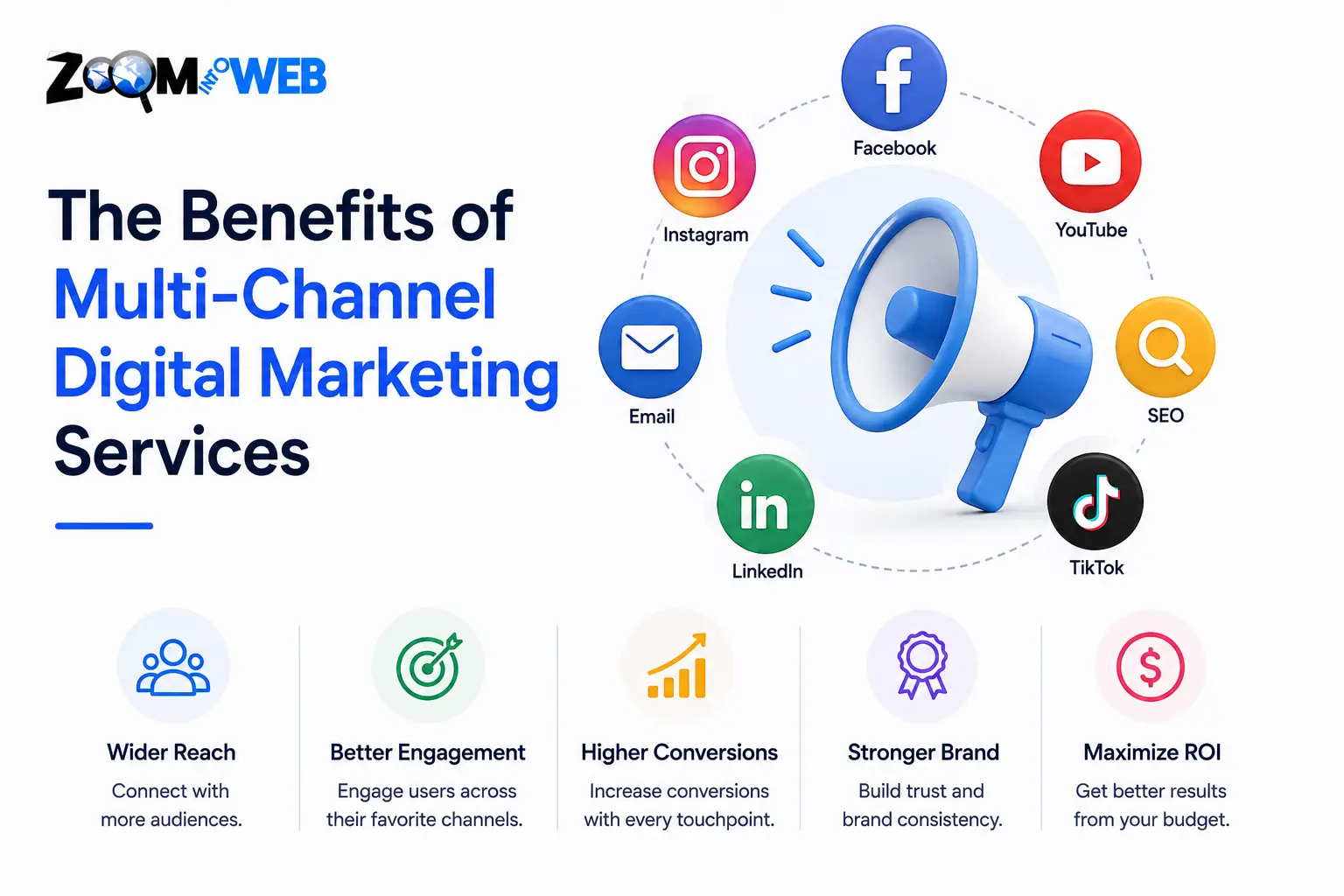
Customers can no longer connect with brands on a single platform. Customers can find a company via Google or connect with it via Instagram or read an email, or watch a YouTube film, then visit the website before making a purchase.
This is the reason multi-channel digital marketing solutions are now a crucial element of modern-day marketing strategies. Instead of relying on a single platform, companies make use of various digital channels to connect with clients at different points of their buying process.
These channels include SEO and social media marketing, email marketing and paid advertisements Content marketing mobile apps, websites and various other digital platforms. The aim isn’t simply that you are present everywhere. It’s about being present on the appropriate channels and sending an appropriate message that is targeted to the right target audience.
What Is Multi-Channel Digital Marketing?
Multi-channel digital marketing refers to the process of promoting an organization using multiple channels of marketing to engage and reach its intended audience.
For instance, a company might employ:
- SEO to attract users looking for Google
- Social media can help build awareness and increase engagement
- Email marketing is a way to keep leads in the loop
- PPC advertising can generate immediate traffic
- Content marketing for educating prospective customers
- A landing page or website that converts visitors to customers or leads.
Each channel plays a distinct purpose, but they should all serve the same business goal.
It is also crucial to know the distinction between multi-channel marketing and omnichannel marketing. Multi-channel marketing makes use of multiple channels to communicate with customers, whereas omnichannel marketing is focused on connecting the channels together to create a unidirectional customer experience.
1. Reach a Wider Audience
One of the main advantages of multi-channel digital marketing services is the increased reach.
Your customers aren’t all making use of one platform. Some people may use Google, and others might prefer to spend time on Instagram, LinkedIn, YouTube, or via email.
Utilizing multiple channels allows companies to reach various audience segments according to their online habits and preferences.
For instance, LinkedIn can be valuable for B2B businesses, whereas Instagram and YouTube might be better for consumer brands with a visual focus.
The most important thing is to determine the areas where your potential customers spend their time, instead of trying to make use of every platform.
2. Improve Brand Visibility and Recognition
Repetition of exposure can help customers become more familiar with a company’s name.
A potential client might initially discover your company’s name in Google for results, then come across your social media posts and then receive the email address of your company.
When the brand’s voice, along with the visual identity, voice, and message are the same, these interactions increase trust and recognition.
But consistency doesn’t mean that you post identical content across all channels. Each channel must have content that is tailored to its target audience and style while still maintaining the same brand image.
3. Increase Customer Engagement
Different customers have different preferences for communicating with companies.
Some prefer social media platforms, whereas others prefer email or search engines, websites, or messaging platforms.
Multi-channel marketing offers customers greater opportunities to connect with your company.
For example, a person might stumble across your offering through a post on social media or visit your website for more details. Then, they will receive an email with an offer that is relevant.
This provides numerous opportunities for meaningful interaction all along the journey of the consumer.
4. Create a Better Customer Experience
A well-designed multi-channel strategy will enable customers to connect with your business.
Imagine a potential customer finding your services via Google and then visiting your site and downloading a manual and then receiving a helpful follow-up email.
Every interaction should be a sense of connection and meaningful.
Businesses can enhance their customer experience through consistent messaging, audience segmentation, automating marketing, and customer information. A well-integrated approach can assist marketers to understand the channels that contribute to various stages of the customer’s journey.
5. Generate More Leads and Conversions
Utilizing multiple channels gives you greater opportunities to draw prospective customers.
A business may create leads through:
- Organic search traffic
- Social media campaigns
- Paid-search advertising
- Pages that land on the page
- Email campaigns
- Content downloads
- Retargeting campaigns
For example, a person who visits a page on a product but does not buy can later be contacted through an appropriate remarketing program or by email.
Instead of relying solely on one interaction, businesses can make use of multiple touchpoints to assist customers through the process of gaining awareness, and finally conversion.
6. Make Better Data-Driven Decisions
Another advantage of multi-channel marketing is the volume of performance information companies can gather.
Marketers can evaluate the impact of metrics like website traffic engagement, leads, conversions cost per acquisition results from email campaigns, as well as the performance of their advertising.
This information can help answer some crucial questions:
- Which channels draw the most customers?
- Which campaigns produce qualified leads?
- Where do potential customers drop off?
- What content gets the most response?
- Which channels give the greatest ROI?
By analyzing the data regularly, business owners can shift their resources and focus on actions that yield better results.
7. Improve Marketing ROI
Multi-channel marketing is not the same as investing equally on all platforms.
Instead, they should analyze the effectiveness of every channel and then allocate their resources in accordance with the goals and performance of each channel.
For instance, if SEO produces regular qualified traffic, but the paid campaigns generate very few conversions, the company could adjust its spending in line with the results.
Data-driven optimization reduces wasted expenses and helps marketers focus on the channels that can contribute to growth in business.
8. Build Stronger Customer Loyalty
Multi-channel marketing isn’t only about getting new customers. It also helps companies keep in touch with existing customers.
Social media newsletters, email newsletters, content, personalized offers useful resources, loyalty programs and remarketing are all ways to keep customers interested following the purchase.
If customers are consistently provided with useful and relevant information, they will more often recall the brand name and think about it in the future.
How to Build an Effective Multi-Channel Marketing Strategy
The use of multiple channels without a clearly defined strategy can cause confusion and waste resources. A strategy that is successful should begin by following these steps:
Understand Your Target Audience
Find out who your customers are who they are, what problems they’re trying to solve, and what platforms they are most relying on.
Set Clear Goals
Choose if your primary goal is branding awareness, website traffic leads, sales, lead generation, customers’ retention, or some other specific goal that can be measured.
Select the Right Channels
It is not necessary to utilize every platform. Pick channels that are suitable for your target audience, industry budget, as well as your business objectives.
Create Consistent Messaging
Your content should appear and feel as if it came from the same company regardless of whether the format shifts between platforms.
Track Performance
Make use of analytics and track conversions to find out what’s working and what improvement is needed.
Test and Optimize
The performance of your marketing can change over time. Continuously test your content, targeted promotions as well as landing pages and campaigns to increase the effectiveness of your efforts.
Common Challenges of Multi-Channel Marketing
Although multi-channel marketing has substantial benefits, managing multiple channels can be difficult.
Companies may face issues with inconsistent communication, fragmented customer information as well as inadequate resources, attribution, and ensuring content quality across different platforms.
The answer is not just to increase the number of channels. Companies should develop a clearly defined plan, employ the right automation tools, set up the same brand guidelines for their brands, and continuously analyze the effectiveness of their strategies.
Marketing automation and artificial intelligence may assist businesses in managing routine tasks, customizing messages, analyzing data, and boost campaign effectiveness.
Frequently Asked Questions
What is a multi-channel digital marketing service?
Multi-channel digital marketing solutions involve utilizing multiple digital platforms like SEO social media, social media, email marketing Content marketing, PPC and websites to reach out and interact with customers.
Why is multi-channel digital marketing so important?
It assists businesses in reaching customers across multiple platforms, boost visibility, increases lead opportunities for engagement, generate leads, and helps customers through their purchasing journey.
What’s the distinction between multi-channel marketing and multi-channel marketing?
Multichannel marketing utilizes different channels to communicate with customers. Omnichannel marketing goes even further by linking these channels to provide an integrated and seamless customer experience.
Which channels should businesses make use of?
The most appropriate channels depend on the intended audience and industry, budget, and business goals. Some common options include SEO and social media, as well as email marketing Content marketing, PPC and websites.
Do multi-channel marketing boost conversions?
It increases the chances of conversion through allowing businesses to connect with potential customers via various interactions. The outcomes depend on the choice of channel, the messaging, the targeting customers’ experience, and the effectiveness of campaigns.
What can companies do to measure the performance of multi-channel marketing?
Companies can monitor the performance of their business by measuring engagement, traffic, leads and conversions, as well as revenue, customer acquisition cost, and ROI. Comparing the performance of different channels can help determine the best places to increase or decrease investment.
Conclusion
Digital marketing multi-channel solutions Offers businesses a viable method of reaching customers on the platforms that they already use.
From increasing brand awareness and engagement, to generate leads boosting the number of conversions, gathering valuable information and boosting ROI, a properly planned multi-channel strategy can help with all stages of the journey.
The trick is not to make use of the most channels you can. It’s about choosing the most appropriate channels, offering valuable content, ensuring consistency in branding, track results, and continually improving the plan.
Companies that know their audience and can connect their marketing efforts to relevant channels can strengthen relationships with their customers and sustain digital growth.
Written by the Zoom Into Web Team
This content was written by the Zoom Into Web team, combining hands-on experience in web development, software solutions, and digital marketing. We create accurate, practical, and up-to-date content to help businesses make informed technology decisions.
