
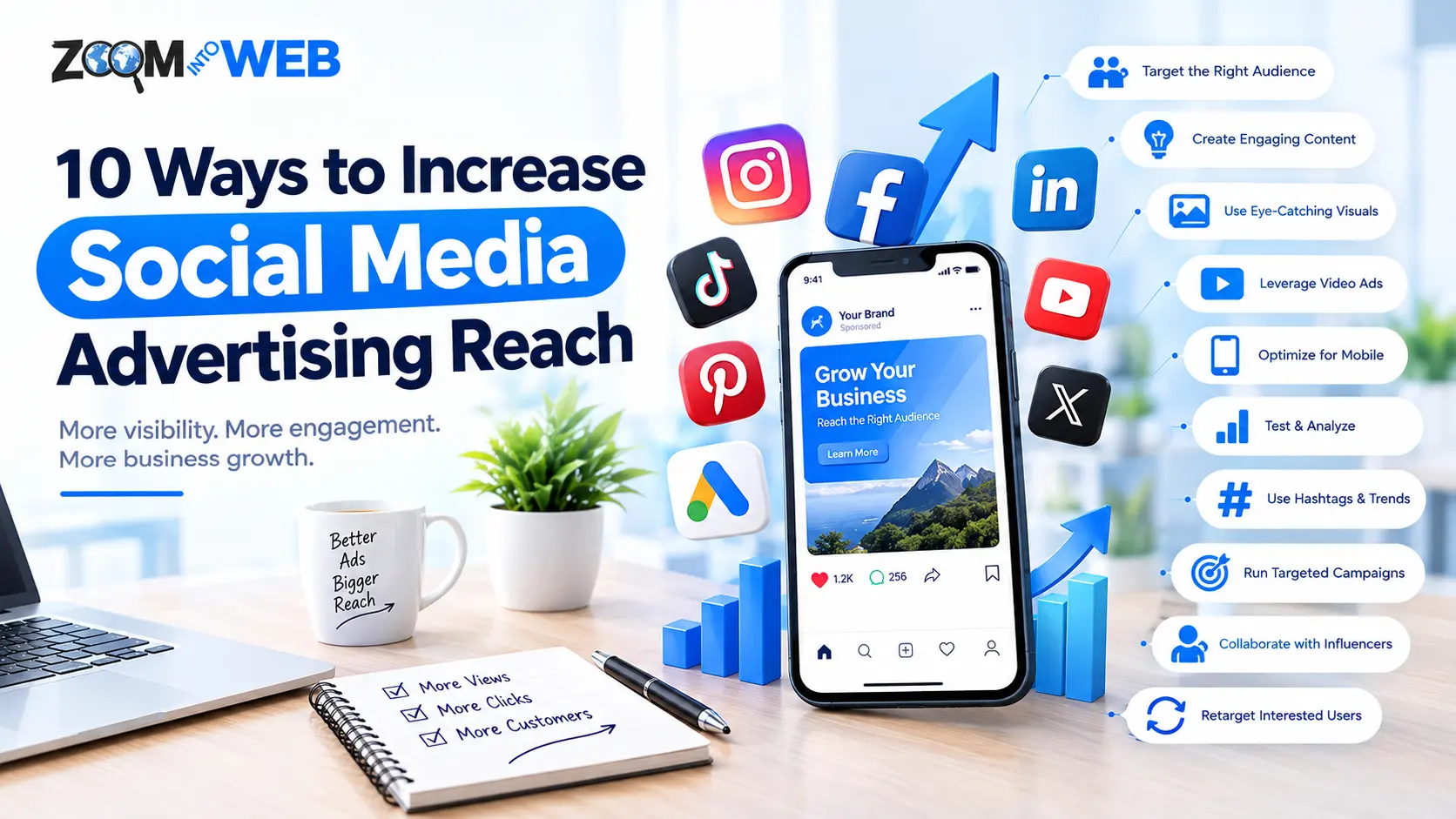
The span of your social media advertising reach depends on more than your budget. Businesses must research the right audience, experiment with ad creatives and placements, and continue optimizing their social media advertising campaigns. This process helps them get more visibility in front of the people who matter without wasting the budget on irrelevant audiences.
Whether a company uses Facebook, Instagram, LinkedIn, or other social media advertising platforms, these 10 methods will help it boost its reach, analyze its performance, and make informed decisions for future campaigns.
What Is Social Media Advertising Reach?
In short, social media advertising reach is the audience size for a company’s paid social media promotions. In other words, it is a general impression of how many people saw sponsored posts. However, the term “impressions” refers to a different metric.
Social media impressions are the number of times an advertisement appeared on a person’s screen in each time frame. A post can register multiple impressions if the same person sees it more than once. On the other hand, reach measures how many individuals saw the advertising content. If the business spends $5,000 on social media marketing and gets 2,500 impressions with 2,000 reach, half of the impressions counted for people seeing the same social media ad.
Depending on the advertising goals, companies value social media reach differently. A business that wants to build brand awareness can benefit from a larger span of social media advertising. However, the changes in impressions do not equal changes in results. A company must consider its advertising goals, audience, budget, and other factors before changing the strategy.
10 Ways to Increase Social Media Advertising Reach
1. Target the Right Audience
The most crucial aspect of increasing social media advertising reach is understanding which audiences to target. A company should create buyer personas to help visualize real people instead of random faces. A business should research the target audience’s characteristics and select the criteria to use for social media ads. They can base the audience targeting on these factors:
– Demographic: Age, gender, location, and other permitted criteria
– Interests and behavior: Characteristics that fit the ideal customer, including job roles for B2B social media advertising
– Needs: Problems that the company can solve and reasons why prospects want to buy the product or service
Local businesses or those that offer services rather than products need to target people in their service area. At the same time, B2B companies should consider the audience’s industry, occupation, and other characteristics permitted by the advertising platform. Marketers should also keep the targeting criteria realistic and research-driven.
2. Design Engaging Social Media Ad Creatives
Marketers have to design compelling advertisements that spark the attention and curiosity of the target audience. The creative part of social advertising can make or break an entire campaign. The ad creative should deliver a clear message and tell the audience something they want to know. Businesses can increase their social media advertising reach by giving the target audience a valid reason to engage with the content. Some critical guidelines for creating effective ad creatives include the following:
– Using high-quality images or videos that fit the chosen media placements
– Presenting a compelling offer or value proposition, such as an informative resource or an appealing product demonstration
– Writing short and straightforward headlines that convey the main value of the ad
– Including a clear call-to-action (CTA) that tells the audience what they should do next
– Making the landing page relevant and easy to navigate
For example, skincare companies can A/B test different creatives for their social media ads. One version could have an informative headline about the benefits of a specific skincare ingredient. The other version could demonstrate the exact product that the company sells. Once the marketers see which social media ad creatives performed better, they can use this information for future advertisements.
3. Pick the Right Advertising Platforms
Businesses should understand that each social media platform is different because it hosts distinct audiences. Smart advertisers do not use the same social media advertising strategy for every business. They put more budget into the platforms where the target audience is more likely to engage with the brand. In other words, a company must pick the best social media platforms for advertising their products or services. Some advertisers can use Facebook and Instagram for their broad audiences and visual appeal. Others can use LinkedIn to promote their products to business professionals.
Each platform has different targeting options that advertisers can use for their social media marketing. Businesses should identify the audiences that fit their targeting criteria and choose the ones that permit the highest span of advertising. Marketers should never limit the audience unless social media insights prove that a specific audience performs worse than others.
4. A/B Test Different Ad Sets
An advertiser can use A/B testing to increase social media advertising reach by finding out which marketing mix elements produce the highest span of advertising. The marketers should test the variations of a single advertising element while keeping the other components constant. The most effective test involves using two similar but different advertisements and measuring their performance against a specific metric. Subsequently, the business should analyze the results and apply the new insights to the next round of advertisements.
Marketers must follow a few rules to ensure that the A/B testing yields accurate and actionable results. First, they should only change one variable per test to avoid altering multiple elements at once. Second, they must set a suitable metric to measure the span of advertising and several other performance indicators. The marketers should give the test time to produce statistically significant results before concluding their findings. Finally, the business should use the collected data to inform their advertising decisions.
For example, advertisers can increase their social media advertising reach by conducting an A/B test. The control group can receive one social media ad creative, and the test group can receive an alternative creative. The marketers can analyze which advertisement received a higher span of advertising coverage. They can later apply the new insights to other advertisements by following the same procedure.
5. Adjust Ad Placements and Scheduling
Ad placements refer to the different positions on a social media platform where an advertisement can appear. On the other hand, ad scheduling refers to when the advertisement appears, depending on the hour or day. Some marketers utilize placements and scheduling to increase the span of their social media advertising reach. However, they should only change these settings when the previous adjustments yielded satisfactory results. The best way to start is to examine the ad placements and choose the ones that are suitable for the selected media type and advertising objectives.
For example, businesses can choose vertical videos for Instagram Stories and Facebook Reels. They should base their decisions on the past performance of social media advertising placements. Marketers can also use the “Automated Placements” option that Facebook offers for its advertising products. It is a wise decision to examine individual placements and remove the ones that did not work. Subsequently, marketers can utilize the Facebook ad manager and analyze the suggested placements for further insight.
6. Utilize Retargeting Strategies
Retargeting, also known as remarketing, is a digital marketing strategy that helps companies reach out to previous website visitors or customers. Advertisers can use Retargeting to increase social media advertising reach because it helps them engage with those who have shown an interest in their brand.
Depending on the privacy regulations, Retargeting can also help businesses reach out to those who visited their website, engaged with their social media content, or even used their services. Advertisers can use Retargeting to inform those who visited a specific page about the company’s latest promotions, products, or services. For example, a business that sells skincare products online can use Retargeting to let past website visitors know about their newest collection. Alternatively, a company that provides consulting services can use Retargeting to share a useful case study with those who engage with its past content.
7. Collaborate With Influencers or Creators
An effective way to increase the span of social media advertising reach is to collaborate with influencers or creators. They can help a business reach out to new audiences without spending a fortune on traditional advertising. Marketers should carefully choose influencers and creators based on their relevance to the company’s values, audience, and offerings. Businesses should not base their decisions solely on influencers’ follower counts, reach, or popularity. Instead, they should prioritize influencers who have a strong connection with their audiences and can deliver value to their customers.
8. Encourage User-Generated Content
User-generated content (UGC) refers to any content that appears on a social media platform and is created by consumers rather than the brands themselves. UGC is an excellent way to increase the reach of social media advertising because it provides genuine opinions about a product or service. Marketers can encourage their customers to contribute their opinions, recommendations, reviews, and related content. Businesses must obtain the necessary permissions before publishing UGC on their social media accounts or using it for their advertising purposes. Moreover, they must comply with the relevant advertising and privacy regulations.
9. Measure and Analyze Advertising Performance

Marketers must examine the performance of their social media advertising campaigns and look for the necessary insights. They can increase the span of social media advertising by analyzing which parts of the campaign contributed to the overall success.
For example, advertisers can consider the following metrics to measure and analyze their social media advertising performance:
| Metric | Description |
| Reach | The number of people who saw the advertisements |
| Impressions | The number of times the advertisements appeared |
| Frequency | The average number of times one person saw the advertisements |
| CPM | Cost per thousand impressions |
| CTR | The percentage of impressions that led to a click (varies depending on the social media platform) |
| Conversion rate | The percentage of relevant visits or impressions that led to a conversion |
| Cost per result | The cost of a specific result, depending on the social media advertising objective |
Marketers should always remember that each of these indicators relates to the overall span of social media advertising reach. Therefore, they should examine all the metrics in this list and look for a pattern. Understanding the relationship between reach and impressions can help increase span in advertising. Similarly, a high click-through rate (CTR) and low conversion rate can signal that the advertisements do not align with the intended purpose.
10. Adjust The Advertising Budget
The span of social media advertising reach is affected by several factors beyond an advertiser’s control. Increasing the advertising budget can help expand the span of social media advertising. However, a larger advertising budget does not guarantee that a business will obtain more value for its money.
An advertiser can increase the span of social media advertising reach while investing in their campaigns wisely. The key is to consider the advertising objectives, budget, audience, creatives, and overall performance before adjusting the budget. Marketers can use the following five steps as a guide:
1. Set a budget that fits the advertiser’s requirements and financial capabilities. It should depend on the advertising objective and the expected cost per lead, customer, or other result.
2. Create a few ad sets and choose the audiences and creatives that fit the advertising objectives.
3. Look for the most successful advertisements and audiences. Then, increase the budget to obtain desirable results.
4. Continue increasing the span of social media advertising reach while watching the cost and the quality of leads, customers, and other results.
For example, a business should examine two separate campaigns or ad sets before changing the advertising budget. One side should be aimed at brand awareness, while the other should be aimed at lead generation. A business should base its decisions on the span of social media advertising and other factors, including cost, CTR, conversion rate, and the value of each result.
How Do You Measure Whether Social Media Ad Reach Is Improving?
Marketers can compare the span of social media advertising reach and observe the progress over time. However, it is essential to look at the bigger picture and consider other crucial indicators. It is also advisable to analyze two or more advertising sets to ensure that the span of social media advertising is increasing.
When a business analyzes the span of social media advertising, it should look at impressions, reach, frequency, and CPM if the advertising objective is brand awareness or engagement. At the same time, the business should focus on CTR, engagement, and conversions if it is building interest in its brand or promoting a product or service.
How Zoom Into Web Can Help With Social Media Advertising
Increasing the span of social media advertising reach is only one part of the process. A business must keep track of its social media advertising analytics, analyze the data, and optimize its advertising campaigns. However, it might not have enough time or resources to manage this complex endeavor. Fortunately, experienced social media advertising experts can assist them throughout the process.
This section should describe the services that Zoom Into Web offers regarding social media marketing and advertising. It should also contain links to the rest of the blog’s web pages. For example, companies can visit the “How Can Social Media Marketing Help Your Business?” page and the “10 Reasons That Businesses Should Invest in Social Media Marketing” page to learn how social media advertising can contribute to their growth.
If a business wants to increase its social media advertising reach and optimize its paid promotions, it should look for the available services offered by Zoom Into Web. It should choose the ones that meet their requirements and financial capabilities.
Frequently Asked Questions About Increasing Social Media Advertising Reach
What is the fastest way to increase social media advertising reach?
First, businesses should analyze the scope of social media advertising and overall performance before changing anything. It is essential to optimize the paid promotions by using the right audiences, placements, creatives, and other elements. If the audiences were too limited, expanding them might increase the span of social media advertising. The same applies to other options, such as alternative placements.
Does a higher advertising budget always increase reach?
A larger advertising budget can increase the span of social media advertising. However, it is not possible to say that it will increase in every scenario. Other elements, such as overall impressions, CTR, conversion rate, frequency, and others, should be considered.
What is the difference between reach and impressions?
The span of social media advertising reach refers to the number of people who saw advertisements. Impressions refer to the number of times the advertisements appeared. Therefore, one person can see the same advertisement multiple times a day.
How often should social media advertising campaigns be optimized?
It depends on the advertiser’s budget and the volume of advertising traffic. In any case, the marketer should look at the span of social media advertising reach and other performance indicators. Furthermore, it is essential to examine a sufficient sample size before changing the advertising strategy.
Is organic reach the same as paid advertising reach?
No, organic reach refers to the span of social media advertising that a business can achieve without spending money on advertisements. On the other hand, paid advertising reach refers to the span of social media advertising that a business can achieve by spending money on advertisements.
Written by the Zoom Into Web Team
This content was written by the Zoom Into Web team, combining hands-on experience in web development, software solutions, and digital marketing. We create accurate, practical, and up-to-date content to help businesses make informed technology decisions.
